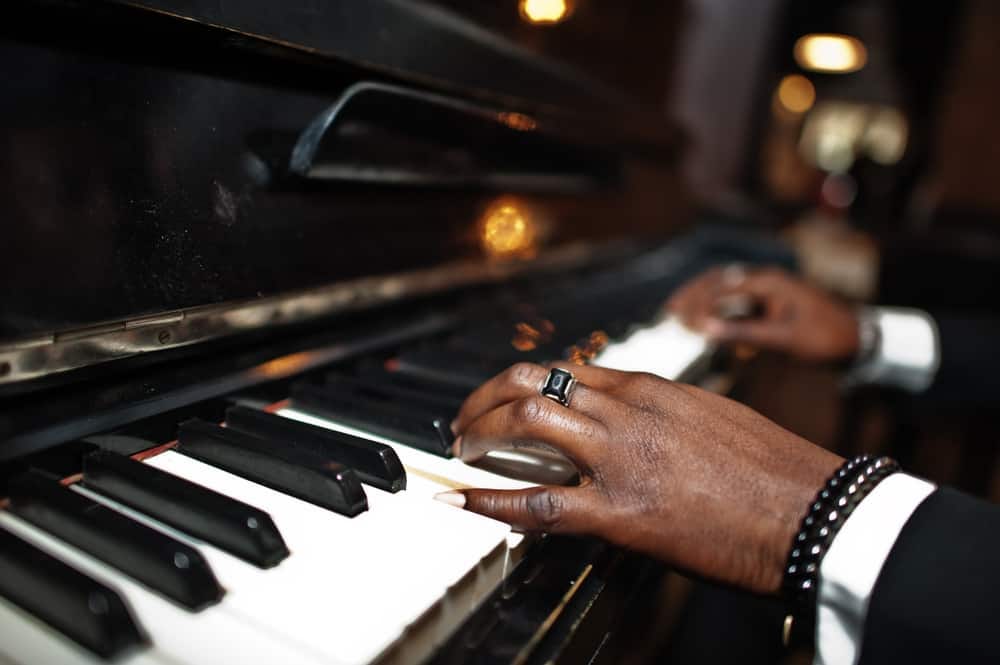
Church Musicians Needed
The Growing Crisis in the Church and Gospel Music
There's a particular kind of beauty that emerges when a Hammond B-3 organ swells beneath a choir's crescendo on a Sunday morning. It's the sound of transcendence breaking into ordinary time, of the ineffable made momentarily tangible through melody and rhythm. For generations, this has been especially true in the African-American church, where music has served not merely as prelude to worship but as the very vehicle of it—where the distinction between prayer and song dissolves entirely.
Yet something is changing in our sanctuaries, and the implications reach far beyond matters of musical excellence. We are witnessing a quiet crisis in church music that reflects deeper fractures in American religious life, and unless we attend to it with both urgency and wisdom, we risk losing something essential not just to our worship, but to our capacity for community itself.
The Inheritance We Risk Squandering
To understand what's at stake, we must first appreciate what we've been given. The tradition of Gospel music in the African-American church represents one of America's most profound cultural achievements—a theological and artistic synthesis forged in the crucible of suffering and sustained by unshakeable hope.
Thomas Dorsey, the "Father of Gospel Music," understood this intuitively. A former blues pianist who brought the emotional intensity of secular music into the sacred space, Dorsey gave us "Take My Hand, Precious Lord" and dozens of other standards that married the longing of the blues with the promises of Scripture. His innovation wasn't merely musical; it was theological—an insistence that God meets us in our sorrow and that our worship should reflect the full range of human emotion.
Mattie Moss Clark expanded this vision, training her famous daughters and countless others in the art of multi-part harmony that could make a congregation feel like heaven had descended into their midst. Margaret Douroux gave us "Give Me a Clean Heart" and modeled a composer's dedication to both lyrical depth and melodic accessibility. V. Michael McKay gave us “All In His Hands,” “The Potter's House” and brought skilled writing, medley arranged worship, and sophistication to the Gospel idiom. Andre Crouch's "My Tribute" and "Soon and Very Soon" achieved that rarest of things—songs that feel both ancient and contemporary, personal and universal.
Richard Smallwood's "Total Praise" and "Center of My Joy" demonstrated how sophisticated harmonic language could deepen rather than obscure worship's essential purpose. And these are but a few among a company that stretches back through Mahalia Jackson and forward through countless musicians including James Cleveland, Milton Biggham, John P. Kee, and the run of mass choir recordings. But also to all of the musicians whose names never made it to album covers but whose offerings every Sunday morning sustained their communities.
This tradition didn't emerge from nowhere. It was cultivated intentionally, nurtured through apprenticeship and example, sustained by communities that understood music as vocation rather than entertainment.
The Great Unraveling
Now consider where we are. According to the Faith Communities Today study, the median American congregation has just 65 regular participants. Half of all congregations have fewer than that number. These are not institutions with budgets to compete in an increasingly professionalized musical landscape.
Meanwhile, across Texas, Louisiana, and Mississippi—regions where church and community remain more tightly woven—there persists a robust supply of gifted musicians. But these are increasingly exceptions. In much of the country, churches struggle to find musicians with even basic competency, let alone the kind of training that once characterized church music programs.
How did we arrive here? The causes are multiple and mutually reinforcing.
First, there's the inexorable pull of secularization. As Christianity declines in the West—and American church attendance continues its decades-long slide—fewer young people grow up immersed in the culture that once produced musicians almost as a byproduct of faithful participation. You cannot become an excellent church musician if you're never in church to begin with.
Second, there's the simple matter of money. A gifted keyboardist can make more playing at a nightclub on Saturday than serving at a small church for a month. Session work, teaching, performance opportunities in secular contexts—all of these offer compensation that struggling congregations simply cannot match. Where previous generations might have viewed church music as a calling that transcended economic calculation, many contemporary musicians reasonably view church opportunities as gigs, negotiable and ultimately secondary to more lucrative options.
Third, even within the church world, a new stratification has emerged. Predominantly white megachurches, often with budgets in the millions, offer compensation packages that smaller, often predominantly Black churches cannot begin to approach. The result is a kind of musical gentrification, where talent flows toward wealth, leaving smaller congregations—often those with the richest musical traditions—increasingly impoverished.
This creates a vicious cycle. As small churches lose their musicians to better opportunities, they lose one of the primary ways they attract and retain younger members. As they shrink, they can afford even less. The median congregation cannot compete with the $40,000, $50,000, or $60,000 annual packages that some megachurches offer their music ministers, never mind the benefits, the professional development opportunities, the networking that comes with those positions.
The Deeper Problem: A Crisis of Discipleship
Yet even if we could solve the economic equation—and we should try—we would still face a more fundamental challenge: the church has largely abandoned the project of spiritually forming its musicians.
Consider the string of scandals that have rocked the Gospel music world in recent years. Consider the musicians whose personal lives stand in glaring contradiction to the message they proclaim through song each Sunday. Consider the worship leaders who cycle through churches like hired guns, their gifts unmoored from any deep accountability to a community or tradition. These failures aren't primarily about insufficient talent or inadequate compensation. They're about the absence of discipleship.
Musicians and worship leaders occupy a peculiar position in the life of the church. They stand before the congregation week after week, giving voice and shape to the community's praise. They mediate, in a sense, between the gathered people and the God they worship. This is not a role to be undertaken lightly, yet we have increasingly treated it as though musical competence were the only qualification that mattered.
Scripture understood better. When David organized the musicians for temple worship in 1 Chronicles 25, they were set apart not just for their skill but for their spiritual dedication: "All these were under the direction of their father for the music of the temple of the Lord, with cymbals, lyres and harps, for the ministry at the house of God." The ministry—not the performance, the ministry.
The Psalms repeatedly connect the musician's craft with the condition of the heart: "Sing to him a new song; play skillfully, and shout for joy" (Psalm 33:3). The skill matters, but it's ordered toward joy, toward an encounter with the living God. In Ephesians 5:19, Paul instructs believers to "speak to one another with psalms, hymns, and songs from the Spirit. Sing and make music from your heart to the Lord." The location of the music—the heart—matters as much as its sound.
When Asaph writes in Psalm 73 of his own spiritual crisis, resolved only when he "entered the sanctuary of God," we see the temple musician's vocation: to stand in that sanctuary, to let that encounter with holiness shape both art and life, and then to lead others into that same space of divine encounter.
This is why musicians arguably need more intentional discipleship than the average congregant. Their gifts make them visible, their failures more consequential, their temptations more acute. Without deep spiritual formation, without integration into a community of accountability and care, they become performers rather than worship leaders, technicians rather than servants.
A Path Forward
The hour is late, but not too late. If we're serious about reviving church music—and thereby strengthening one of the church's primary means of forming community and encountering God—we must act on multiple fronts simultaneously.
Start with the children. Churches should establish summer music camps where young people learn not just technique but theology, not just scales but Scripture. Offer weekend lessons in piano, voice, guitar, drums—make these accessible and excellent. The investment required is not trivial, but it's far less than we'll pay in the long run if we outsource musical formation entirely to secular institutions or abandon it altogether.
Create space for youth to express their gifts in forms that feel natural to them. This doesn't mean abandoning traditional hymns or Gospel standards, but it does mean acknowledging that each generation must discover its own voice in worship. Let young people lead youth services, plan youth worship nights, contribute to the regular Sunday gathering. Integration, not isolation, should be our goal—not a youth service that exists in parallel to "real" worship, but opportunities for younger and older generations to learn from and with each other.
Require Bible studies for all musicians and worship leaders. This shouldn't be optional, a nice addition if schedules permit. Make it a condition of service. Musicians need not just musical community but spiritual community—a small group where their faith is challenged, their character formed, their gifts situated within the larger narrative of God's redemptive work.
Invest in workshops and continuing education. Bring in clinicians, host songwriting retreats, create opportunities for musicians to grow in their craft while deepening their theology. Many denominational bodies could facilitate this, pooling resources across congregations to provide training that individual churches couldn't afford alone.
Churches might also consider cooperative models—several small congregations sharing a music director, creating a part-time position that can offer more competitive compensation than any single church could manage alone. This requires swallowing institutional pride, but it might allow survival where isolation leads to decline.
Identify HBCUs with music programs and assist musicians in attending. Challenging these schools to host summer institutes that bring young musicians in from around the country to learn what churches need, and sharpen their artistry and skills in composition, directing, and writing.
Perhaps most importantly, pastors and church leadership must learn to articulate a vision of church music as vocation, not merely as functional necessity. We must recover the understanding that leading worship is a calling with eternal significance, that the apparently humble work of faithfully serving a small congregation Sunday after Sunday is ministry of the highest order.
This means celebrating musicians as ministers, not just employees. It means caring for their spiritual lives with the same intentionality we bring to other leaders. It means defending their compensation before church boards and making the case that excellent worship is not a luxury but a necessity—that what we offer to God in worship reflects what we believe about God himself.
The Worship We Owe
In the end, this isn't really about nostalgia for a golden age of church music, though there's certainly something worth preserving in those traditions. It's not even primarily about maintaining cultural treasures, though the African-American Gospel tradition deserves protection and continuation.
This is about worship itself—about whether our encounters with God will be marked by excellence and sincerity, by beauty and truth, by the kind of wholehearted offering that the Psalms repeatedly demand of us.
"Sing to the Lord a new song," Psalm 96 commands, "sing to the Lord, all the earth." Not sing if you feel like it, not sing if it's convenient, not sing when you can afford professional quality. Just sing. Make the offering. Do it with your whole heart. Do it together.
The crisis in church music is ultimately a question about what we value, what we're willing to sacrifice for, what we believe worship is worth. If we treat musicians as fungible service providers in a marketplace, we shouldn't be surprised when they act accordingly. If we neglect their spiritual formation, we shouldn't be surprised when their lives fail to reflect the songs they sing.
But if we invest in them—in their craft, in their character, in their calling—we might discover that we're investing in something far larger than music. We're investing in the capacity for transcendence, for community, for the kind of beauty that points beyond itself toward the source of all beauty.
Worship matters to God. Surely that means it ought to matter to us—not as an afterthought, not as a line item easily cut from budgets, not as a nice bonus if we can afford it, but as central to our life together, worthy of our finest efforts and our deepest commitments.
The tradition stretching from Thomas Dorsey to the present day reminds us that such investment bears fruit—music that sustains communities, that carries people through suffering, that makes the transcendent tangible even in troubled times. That inheritance is ours to steward. The question is whether we'll prove worthy of the trust.


