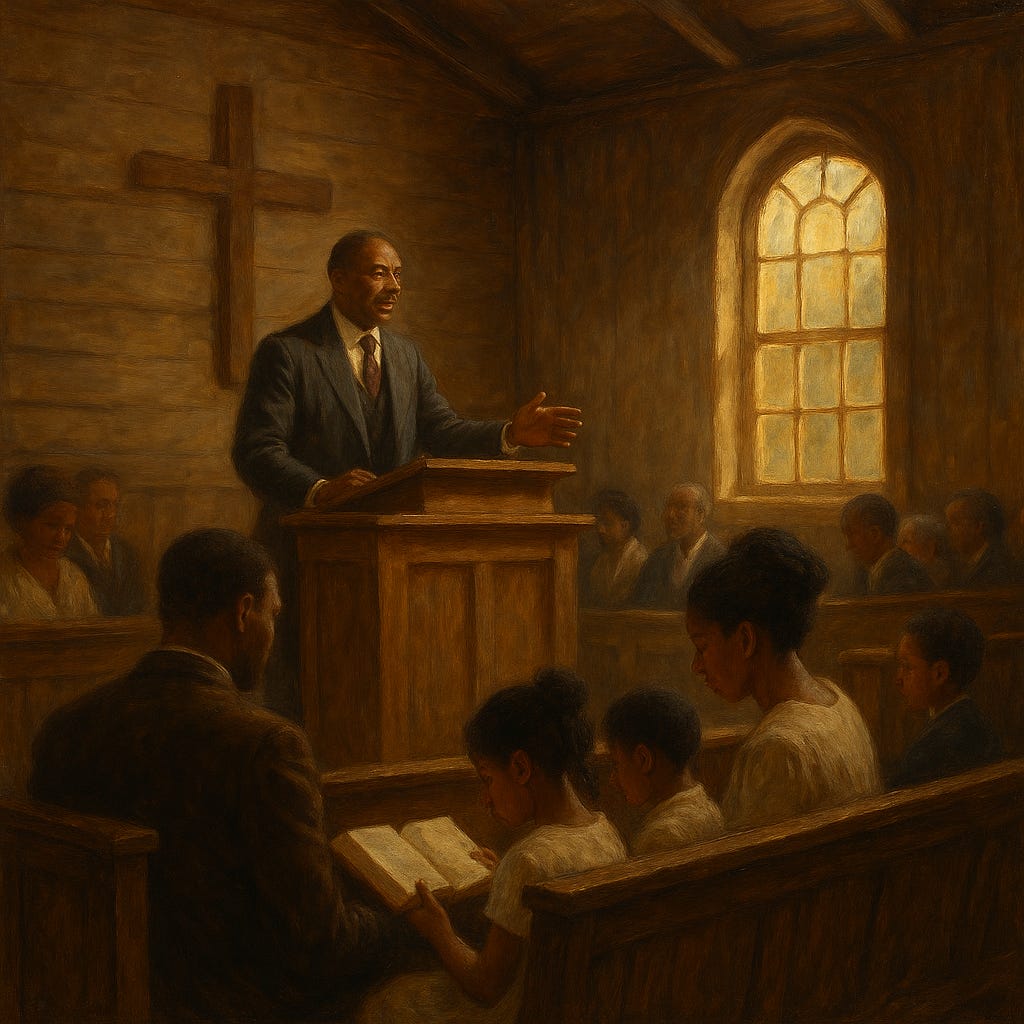
Faith Forged in Trial: The Enduring Orthodox Heart of African-American Christianity
How a community’s steadfast adherence to historic Christian doctrine shaped its moral fiber and societal influence.
In the winding arc of American history, few institutions have been as formative for African-Americans—and, by extension, for the nation at large—as the Black church. From secret gatherings in forests to the pulpit of Ebenezer Baptist, African-American Christians have upheld a theology that is deeply orthodox: a high view of Scripture, an unwavering belief in the atoning work of Christ, and a confident hope in resurrection and justice to come. This orthodoxy, born in the crucible of bondage and nurtured through centuries of struggle, has shaped communal values that remain distinctive today.
A Theology Tempered in Suffering
The origins of Black Christianity in America trace back to the forced migrations of the transatlantic slave trade, yet it was in the midst of captivity that a profound gospel took root. Enslaved Africans found in Christianity both a subversive message—“there is neither slave nor free” (Galatians 3:28)—and a transcendent hope for deliverance. Early black preachers, often preaching under threat of violence, insisted on doctrines that Southern planters found inconvenient: the full deity of Christ, the total depravity of humankind, and the promise of eternal life. These core convictions, affirmed in secret “hush harbors,” planted the seeds of a faith that was unapologetically orthodox.
Orthodoxy as Moral Compass
In the post-Emancipation era, Black churches became beacons of moral and social order in communities starved of resources and besieged by Jim Crow segregation. Pastors—often the most educated leaders available—taught doctrines of personal responsibility, the sanctity of marriage, and the dignity of work. In Sunday school classes and hymnals, congregants absorbed lessons on sin and grace that paralleled the broader Protestant consensus yet resonated with particular force given the community’s trials. The result: an ethic of perseverance, stewardship, and mutual care that carried families through poverty and oppression.
The Civil Rights Testament
The mid-20th century brought Black orthodoxy into the public square. Martin Luther King Jr., Benjamin Mays, Fannie Lou Hamer—these figures drew not on the latest social theories but on the moral grammar of historic Christianity. King’s “Letter from Birmingham Jail” echoes Augustine and the early church fathers more than it does 20th-century political science. The nonviolent resistance he preached was not merely a tactic but a theological imperative: loving one’s neighbor, loving one’s enemy, trusting that divine justice would vindicate the oppressed. This fusion of orthodox belief with social activism gave the Civil Rights Movement its moral clarity and ultimately its success.
Continuity and Change in the Modern Era
Today, surveys consistently show that African-American Christians rank among the most doctrinally committed demographics in the country. Pew Research finds that Black Protestants are more likely than any other group to affirm the Bible as the literal word of God and to attend worship services weekly. Their views on marriage, sanctity of life, and the reality of sin often align closely with historic creeds. Yet this orthodoxy is not static. Pastors and laypeople alike are wrestling with questions that would have been foreign to their grandparents—from same-sex unions to emerging debates over racial justice. And yet, even amid these convulsions, the guiding commitment remains: truth is discovered in the person of Jesus Christ and recorded in Scripture.
The Broader American Impact
The distinctive faith of African-American Christians has not been confined to their own pews. It has infused the broader culture with moral imperatives: an insistence on the dignity of every person, a call to racial reconciliation, and a belief in redemption that transcends political divides. When faith communities and secular activists rallied around same-sex marriage or immigration reform, they often borrowed from the playbook of the Black church—storytelling from the pulpit, grassroots organizing through small groups, and a vibrant musical tradition that lifts lament into hope.
A Call to Remember
In an age when casual spirituality and relativism abound, the example of African-American Christianity stands as a reminder that orthodoxy can be a wellspring of resilience and social transformation. Its historic creeds and sermons—once whispered beneath the canopy of untamed forests—continue to inspire pastors and laypeople to ground their activism in a theology that transcends the ephemeral trends of the moment. To appreciate this distinctive is to recognize that true moral courage often arises from those who hold most firmly to ancient truths.
As our nation grapples with renewed calls for justice, community, and moral clarity, we would do well to look to the African-American church. Here is a living testament to the power of orthodox faith to sustain the downtrodden, to galvanize movements, and to reshape a nation. In the steadfast beliefs of Black America, we find not an antiquated relic but a vibrant blueprint for living well—and living rightly—in turbulent times.


