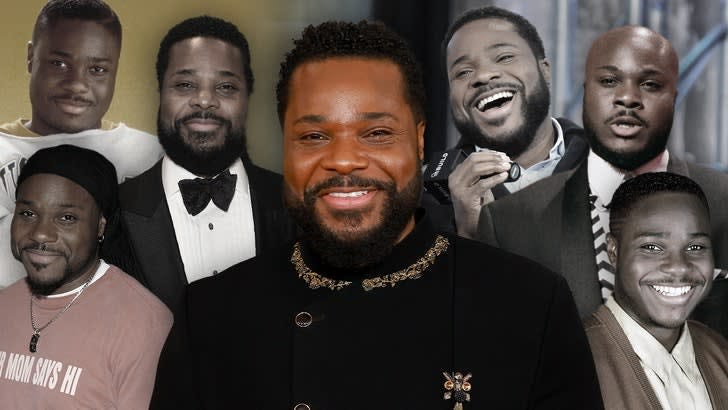
Our Friend Theo: Remembering Malcolm-Jamal Warner
(1970-2025)
There’s a stage of life you don’t quite anticipate—not until it ambushes you. It’s the moment when the names in the obituary section aren’t distant cultural icons or the generation that preceded yours. No, it’s when the names belong to your own classmates, your own contemporaries. I remember my parents occasionally mentioning the passing of an old friend or a familiar name from school. Today, I understand. Today, it’s my generation’s turn.
The news of Malcolm-Jamal Warner’s passing struck a peculiar chord in me. Not because I knew him personally, but because I did. We all did.
To say Malcolm-Jamal Warner was an actor is like saying a childhood home is just wood and drywall. He wasn’t a celebrity in the distant, untouchable sense. He was one of us. He entered our homes every Thursday night, not as a polished performer, but as Theo Huxtable—awkward, funny, uncertain, cool, lost, and trying to find his way. He was our friend. For some of us, he was our mirror.
I was inspired by something Pierre Keys wrote:
"Malcolm-Jamal Warner was the first cool Black teen of the '80s... Malcolm-Jamal Warner was our Michael J. Fox. He was the Black teen who made Black excellence look cool and accessible."
That’s exactly it. Theo wasn’t written to be a mascot or a message. He just was. He was the middle child, the only son of Cliff and Claire Huxtable, caught between expectation and expression, confidence and confusion. He stumbled. He questioned. He learned. And in doing so, he gave us permission to do the same.
For African-American audiences, Theo carried even more weight. In a television landscape still gasping for true representation, he wasn’t just a character; he was a declaration. He was Black boyhood without stereotype. He was an emblem of possibility, relatability, and cool. The Cosby Show certainly transcended the so-called “color line,” but for those who grew up Black in the '80s and '90s, Theo meant something different. He wasn't a side character or comic relief. He was central. He mattered.
But Malcolm-Jamal Warner’s contribution didn’t end when the show did. He grew with us. As we matured, so did he—branching into music, poetry, directing. His spoken word pieces were layered with introspection and cultural weight. His jazz-funk fusion, his collaborations, his quiet refusal to be boxed in—these were not the choices of someone chasing fame, but of someone cultivating authenticity. Malcolm wasn’t trying to stay relevant. He was relevant, because he kept becoming more himself.
There’s something sacred in watching someone evolve before your eyes over decades. In a world where reinvention often feels manufactured, Malcolm’s growth felt like an unfolding. He never exploited his fame, never chased the limelight. Instead, he aged with integrity, letting his craft, his voice, his values deepen with time.
His death is more than a celebrity obituary. It is a cultural marker. It reminds us that we’ve crossed over—that our generation, once the youthful heartbeat of culture, is now writing eulogies for its icons. And this one hurts. Why? Malcolm wasn’t just a fixture of our youth; he was a frame for it.
He made it okay to ask questions, to not have it all together. He gave us cool without arrogance, vulnerability without melodrama, intelligence without pretense. And he did it all while representing a generation of young Black men who rarely saw themselves fully reflected on screen.
In the end, Malcolm-Jamal Warner gave us a gift far greater than thirty minutes of weekly sitcom comfort. He gave us the gift of being seen. Not as polished ideals, but as becoming people.
And now, in his absence, we are left to reflect not just on his life—but on ours. From now on, when I watch reruns of ‘The Cosby Show’, I won’t just laugh at Theo’s antics or shaking my head at his schemes—I’ll remember a friend who walked with us through adolescence, who showed us what it looked like to grow up Black, brilliant, loved, cared for, and beautifully human.
Rest well, Theo. You were never just a character. You were our brother. You were our benchmark. You were one of us.


