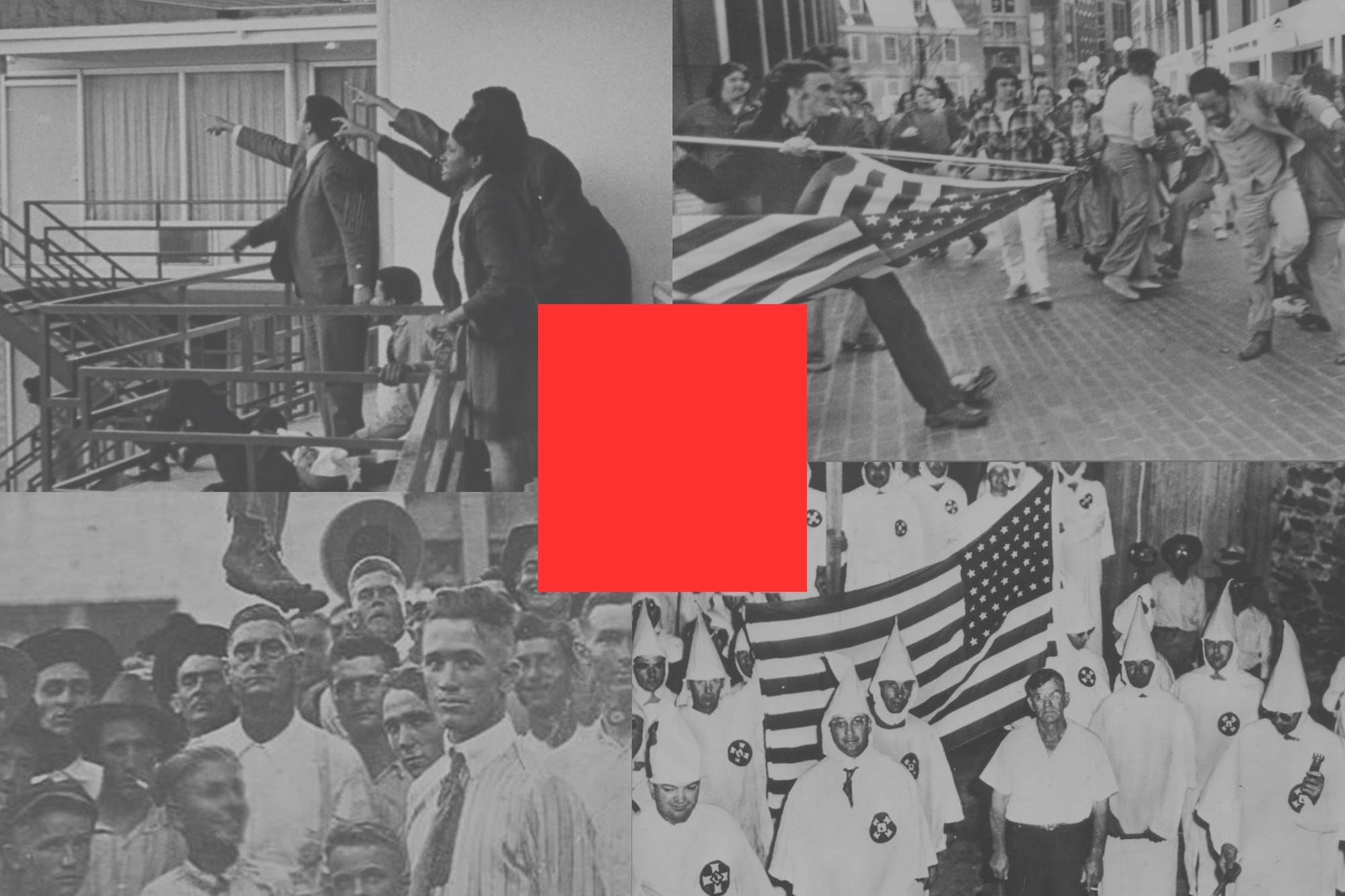
Racism: An Urban Apologetic Response
There's a particular kind of moral evasion that has haunted the American conscience for centuries—a tendency to treat the great sin of racism as though it were merely a political disagreement or a clash of cultural perspectives. But this won't do. It has never done. Racism is not a legitimate worldview that deserves a seat at the table of ideas. It is, at its corrupted core, a construct designed to legitimize hate itself—to dress up the searing white-hot sin of contempt for the image of God in the respectable clothing of pseudoscience, social theory, and national mythology. We need to call this what it is: unregenerate behavior seeking intellectual cover.
The Architecture of Degradation
The legacy of racism in America is not abstract. It is written in the flesh and blood of millions. It is a catalog of dignity destruction and crimes against humanity so vast that the mind recoils from contemplating its full scope: the abduction of human beings from their homelands; the forced separation of families on auction blocks; the centuries of chattel slavery where persons were reduced to property; the systematic rape and sexual trafficking of enslaved women; the routine sodomy and physical abuse inflicted to break spirits; the torture designed to extract compliance; the murders—casual, legal, ritualized.
And when formal slavery ended, the architecture of oppression simply shape shifted and adapted. Jim Crow emerged like a malignant mutation, designed to maintain subordination through law. Propaganda narratives about racial hierarchy were woven into the fabric of American education, entertainment, and religion itself. Segregation enforced spatial degradation. Disenfranchisement in banking meant stolen wealth across generations. Restrictions on property ownership meant stolen stability. Voting restrictions meant stolen voice. The denial of citizenship rights meant stolen dignity.
This is not ancient history. This is the America that shaped the grandparents and great-grandparents of people living today.
The Impossibility of Christian Racism
Here is where we must speak with prophetic clarity: racism is utterly incompatible with biblical Christianity. Not partially compatible. Not reconcilable with some theological gymnastics. Completely incompatible.
The Apostle Paul, writing to a fractured church in Galatia, declared: "There is neither Jew nor Gentile, neither slave nor free, nor is there male and female, for you are all one in Christ Jesus" (Galatians 3:28). This wasn't merely spiritual metaphor—it was a revolutionary reordering of social hierarchy. The dividing walls were demolished.
James, the brother of Jesus, asked with biting irony: "My brothers and sisters, believers in our glorious Lord Jesus Christ must not show favoritism. Suppose a man comes into your meeting wearing a gold ring and fine clothes, and a poor man in filthy old clothes also comes in... have you not discriminated among yourselves and become judges with evil thoughts?" (James 2:1-4). If favoritism based on wealth is condemned, how much more the favoritism based on melanin?
The entire arc of Scripture bends toward a vision of multiethnic worship. Revelation 7:9 describes "a great multitude that no one could count, from every nation, tribe, people and language, standing before the throne." This is not a concession to diversity; it is the fulfillment of God's design.
Peter had to learn this painfully. His vision in Acts 10 wasn't primarily about food—it was about people. "Do not call anything impure that God has made clean" was God's rebuke to ethnic prejudice. When Peter later wavered on this principle, Paul confronted him "to his face" (Galatians 2:11) because the gospel itself was at stake.
Spurgeon's Prophetic Witness
Charles Haddon Spurgeon, the great Victorian preacher, understood this with perfect clarity. In his 1860 sermon, he thundered: "I do from my inmost soul detest slavery... and although I commune at the Lord's table with men of all creeds, yet with a slave-holder I have no fellowship of any sort or kind. Whenever one has called upon me, I have considered it my duty to express my detestation of his wickedness, and I would as soon think of receiving a murderer into my church... as a man stealer."
Spurgeon called it what it was: man-stealing, placing it alongside murder as an excommunicable offense. He refused the comfort of ambiguity. He lost American subscribers to his sermons and faced threats to his life. But he could not square the cross of Christ with the chains of bondage.
The Imago Dei: Our True North
The Christian vision of humanity begins and ends with Genesis 1:27: "So God created mankind in his own image, in the image of God he created them; male and female he created them." The imago Dei—the image of God—is stamped on every human being regardless of ethnicity, regardless of origin, regardless of station.
This doctrine is not a minor addendum to Christian theology. It is foundational. To bear God's image means every person possesses inherent dignity, infinite worth, and sacred inviolability. You cannot reduce an image-bearer to a commodity. You cannot create a hierarchy among those who share the same divine imprint. You cannot oppress, exploit, or extinguish the life of an image-bearer without assaulting God Himself.
The scope of the imago Dei is universal—it encompasses all of humanity in every age, every place, every shade. Its beauty lies in its equalizing power. The poorest child in the most forgotten corner of the world bears the same image as kings and presidents. The prisoner, the refugee, the enslaved—all crowned with the dignity that comes from divine design.
When we grasp this truth, racism is revealed as not merely a social evil but a theological catastrophe—an assault on God's own image, a desecration of His temple, which is humanity itself.
The Path Forward
We live in an age of exhaustion around these conversations. Many are weary of the subject. Some insist it's time to "move on." But you cannot move on from unrepented sin. You cannot move on from unpaid debts. You cannot move on from wounds that have never been properly bound.
The Christian response to racism is not accommodation, not equivocation, not the moderating instinct that seeks to find virtue in "both sides." The Christian response is repentance—clear-eyed acknowledgment of sin, genuine grief over damage done, and committed restitution where possible.
It means building what Martin Luther King Jr. called the "Beloved Community"—not through forced equality or empty gestures, but through the revolutionary power of seeing every face as a reflection of God's face. It means pursuing justice not as a political slogan but as a biblical mandate woven throughout the Law and the Prophets.
Most importantly, it means Christians must lead the way. We cannot leave this to secular movements or political parties. The church, which was complicit in America's original sins, must be at the forefront of truth-telling and reconciliation. We must demonstrate that our theology is not abstract—it has hands and feet, it shapes policies and practices, it changes how we see and serve our neighbors.
Racism is not compatible with Christianity because Christianity is, at its core, the radical affirmation of human dignity purchased at infinite cost. The cross declares that every person—every single person—is worth the blood of God. Once you grasp that truth, the edifice of racism crumbles into the rubble it always was.
This is not political correctness. This is biblical fidelity. This is not progressive ideology. This is ancient truth. The question before us is whether we have the courage to live as if we actually believe it.


