Resilience Through Suffering
How Suffering Shaped Black Christian Orthodoxy
There are some truths that are hammered into the soul not in the quiet libraries of the academy but in the cotton fields of Mississippi, the chain gangs of Georgia, or the pews of storefront churches along Chicago’s South Side.
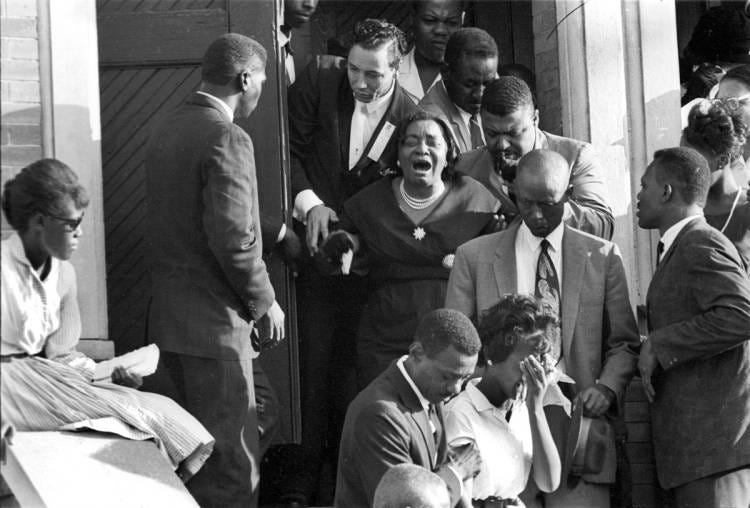
In America, the story of Black Christianity is the story of faith refined in fire. From segregation’s sting, to the present struggles against injustice, African-American believers have continually found strength not by abandoning biblical historic Christian orthodoxy, but by holding it tighter.
Orthodoxy, those essential teachings of the Christian faith, became not only a set of ideas but a lifeline—a way of surviving with dignity and hope.
Slavery, Segregation, and Theological Endurance
The horrors of slavery were not merely physical but spiritual. The early slaves were handed a religion meant to pacify them, a truncated gospel void of liberty. Enslaved men and women were told by their oppressors that the Bible sanctioned their bondage. But they heard in the Scriptures a different message—one that mirrored their own plight. In the story of Israel’s bondage in Egypt, in the lament of the Psalms, in the passion of Jesus, they recognized themselves. Out of this recognition was forged what we might call a theology of endurance.
The slave cabins and hush arbors became sanctuaries where theology was sung as much as preached, where biblical endurance was tested under the whip. Later, segregation brought its own bruises, but the Black church remained a sanctuary of sound doctrine.
Congregations continued their theological work, refining an orthodoxy shaped by resilience.
The faith that survived Jim Crow was not diluted or deconstructed—it was intensified, clarified, and proven by fire.
It was not a place for watered-down faith or vague platitudes, but a center where the old creeds and confessions were lived out in the language of lament, courage, and hope. The endurance of orthodoxy was itself a protest against a culture that tried to deny the humanity of its adherents.
The Hope of Resurrection and Deliverance
If the cross defined the suffering of the African, and later African-American experience, the resurrection gave it direction. Paul’s words in Romans 8 were not abstract philosophy but immediate promise: “For I consider that the sufferings of this present time are not worth comparing with the glory that is to be revealed to us” (Romans 8:18).
One of the central claim of Christianity is that death does not have the final word.
That conviction rang with particular force for a people denied dignity in life. The belief in resurrection was not just about the afterlife—it was, contrary to this misguided quips of Dr. Umar Johnson, about the possibility of deliverance here and now.
Hope is not optimism, which assumes that things will get better by human progress alone. Hope was resurrection faith, rooted in the conviction that the same God who raised Jesus would raise His people, too—out of chains, out of segregation, out of poverty.
The message of Jesus was not an opiate numbing pain but the steady assurance that history bends toward God’s justice and love. Spirituals like “Swing Low, Sweet Chariot” were not just songs but coded testimonies to this enduring hope. The gospel was never merely individual consolation; it was a communal declaration that suffering would not have the last word.
The Enduring Desire for Biblical Exactitude and Practice
Perhaps one of the least noticed but most important elements of Black Christian orthodoxy is its deep commitment to the Bible itself. From Francis Grimké to Adam Clayton Powell, Sr., from Richard Allen to William David Chappelle, the Word of God was handled with care, precision, and reverence. In a nation that distorted scripture for oppression and ill-gotten gain, African-American Christians became students, investigators, and guardians of its exact meaning.
Paul’s exhortation to Timothy rings here with special resonance: “Do your best to present yourself to God as one approved, a worker who has no need to be ashamed, rightly handling the word of truth” (2 Timothy 2:15).
The quest for biblical exactitude was not academic alone; it was survival. Proper doctrine led to proper practice. It was this fidelity to Scripture that gave birth to movements of holiness, revival, and social action. In orthodoxy, the community found both compass and anchor.
The Danger of Forgetting the Past
But there is a danger in our current moment. In the desire to move forward, some are tempted to forget. Forgetting would mean severing the very root from which its resilience and orthodoxy grew. A younger generation, distanced from the scars of chains and Jim Crow, may not fully appreciate the theological endurance that shaped their inheritance. The psalmist’s words serve as warning and reminder: “One generation shall commend your works to another, and shall declare your mighty acts” (Psalm 145:4).
The past is not a weight to drag but a foundation to build upon. The faith forged in the fire of oppression remains one of the most authentic expressions of historic Christianity. It reminds the broader church that orthodoxy without suffering can become brittle, that theology without lament becomes shallow, and that faith without hope of resurrection is no faith at all. To forget the past is to lose sight of how faith was forged and why orthodoxy mattered. It is to risk replacing a tested faith with a fragile one.
In the end, African-American Christian orthodoxy is a living testimony to the paradox of suffering and hope. It shows us that theology is not only shaped in councils and creeds but in cotton fields and courtrooms, in protest marches and prayer meetings. The Black church teaches us that the Christian faith is most durable when it has been tested, most beautiful when it sings through sorrow, and most true when it remembers the cross yet looks toward the empty tomb.


