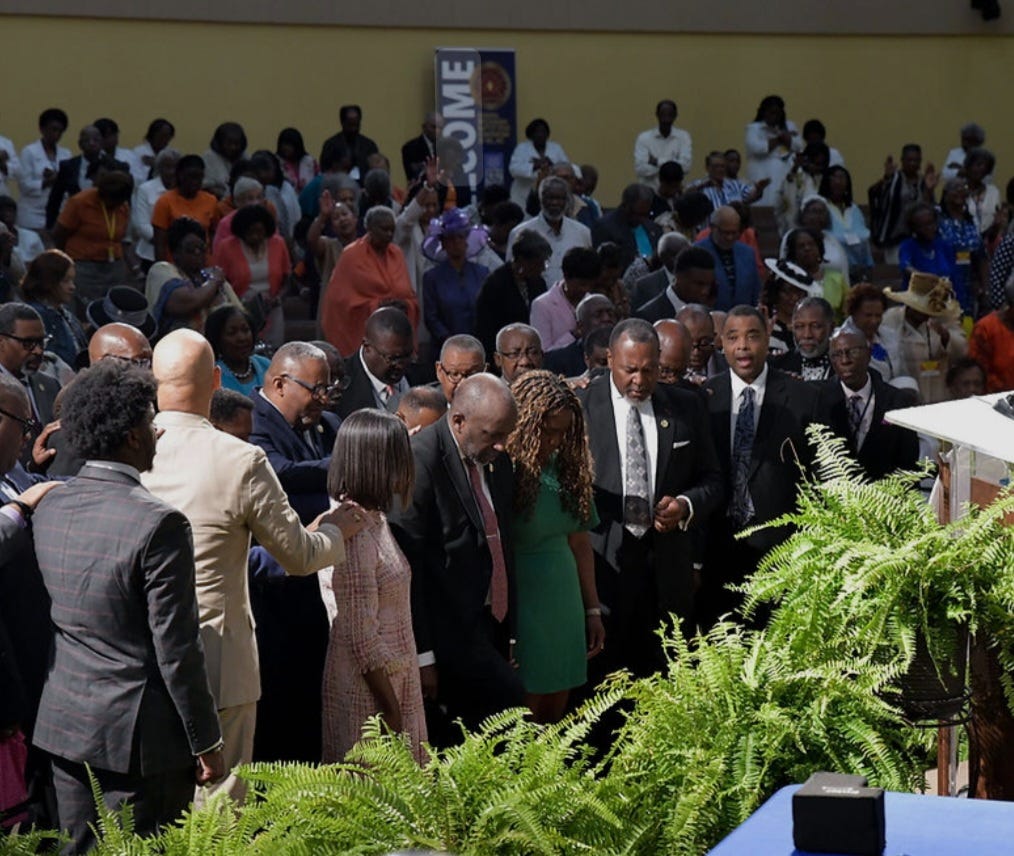
A capillary can carry only so much. Some of the work a church needs is simply too large for the cluster of congregations down the road, and yet too intimate for a national office that has never seen the inside of its sanctuary. That middle distance belongs to the state convention. If the association is the capillary, the state convention is the artery: broad enough to command real resources, close enough to still understand the terrain.
Its calling is to do at scale what no single association can afford, and here the opportunities are enormous. But it should begin where the founders of our benevolent institutions began, with the dignity of the ministers themselves.
THE BETTER MAINTENANCE OF THE MINISTRY
When Northern Baptists chartered the Ministers and Missionaries Benefit Board in 1911, incorporated in 1913 to “promote interest in the better maintenance of the ministry,” they were institutionalizing a conviction our own fathers shared: that a preacher who had poured out his life for the flock should not spend his last years in want.1 What began as modest pensions for aged and disabled ministers has since paid out billions in retirement benefits, and it remains one of the most concrete gifts denominational partnership can offer a pastor. A reimagined state convention can negotiate access to retirement and benefit programs through that board, so that the pastor of the smallest church is not consigned to poverty in old age.
WHAT THE BIBLE TEACHES: THE LABORER AND HIS WAGES
Scripture is not shy about the material care of those who labor in the Word. To neglect it is not thrift; it is disobedience.
The elders who rule well are to be considered worthy of double honor, especially those who work hard at preaching and teaching. For the Scripture says, “You shall not muzzle the ox while he is threshing,” and “The laborer is worthy of his wages.” 1 TIMOTHY 5:17–18
The same Scripture that commands the wage commends the wider partnership of mutual aid. When famine threatened the mother church, “Macedonia and Achaia … [were] pleased to make a contribution for the poor among the saints in Jerusalem” (Romans 15:26), churches giving across every line of distance and difference so that no household of faith would go hungry. Emergency relief, shared capital, the strong bearing up the weak: this is not a modern program invention. It is the collection Paul carried in his own hands, and it is exactly the kind of work a state convention is sized to do.
WHAT A REIMAGINED STATE CONVENTION OFFERS
Beyond retirement, the state body is the right level for a whole suite of shared services: an emergency relief fund for churches struck by fire, flood, or sudden loss; virtual cohorts for continuing pastoral education across the state; loan assistance and access to capital for congregations that cannot get a fair hearing from a commercial bank; professional grant-writing support so that churches doing real community work can secure the funding that is available to them; and scholarships for the students a state’s churches are sending into the world.
It is also the natural steward of the great gatherings and formation programs: an annual state conference worth attending on its merits and not from obligation; a robust summer youth program and youth encampment; a worship and fine-arts workshop that lifts the musical life of every church in the state; an annual historically Black college tour that sets our young people on campuses and lets them imagine their futures; and organized mission trips, domestic and international, that turn believers into senders and goers.
The apostle’s charge to Timothy is the whole philosophy of it: “The things which you have heard from me in the presence of many witnesses, entrust these to faithful men who will be able to teach others also” (2 Timothy 2:2). The state convention exists to entrust, to hand the deposit down and out, from the strong church to the weak, and from one generation to the next.
A convention that lets its laborers starve has forgotten its Bible.
NOTES & SOURCES
Scripture quotations are taken from the New American Standard Bible (NASB). Sources are listed in order of first appearance.
1. MMBB Financial Services, “Our History” and “MMBB and Your Retirement Assets”; Everett C. Goodwin, MMBB: A Pioneer in Employee Benefits, The First 100 Years (founded 1911, chartered 1913; “to promote interest in the better maintenance of the ministry”; more than $3.5 billion paid in benefits to retired members).


