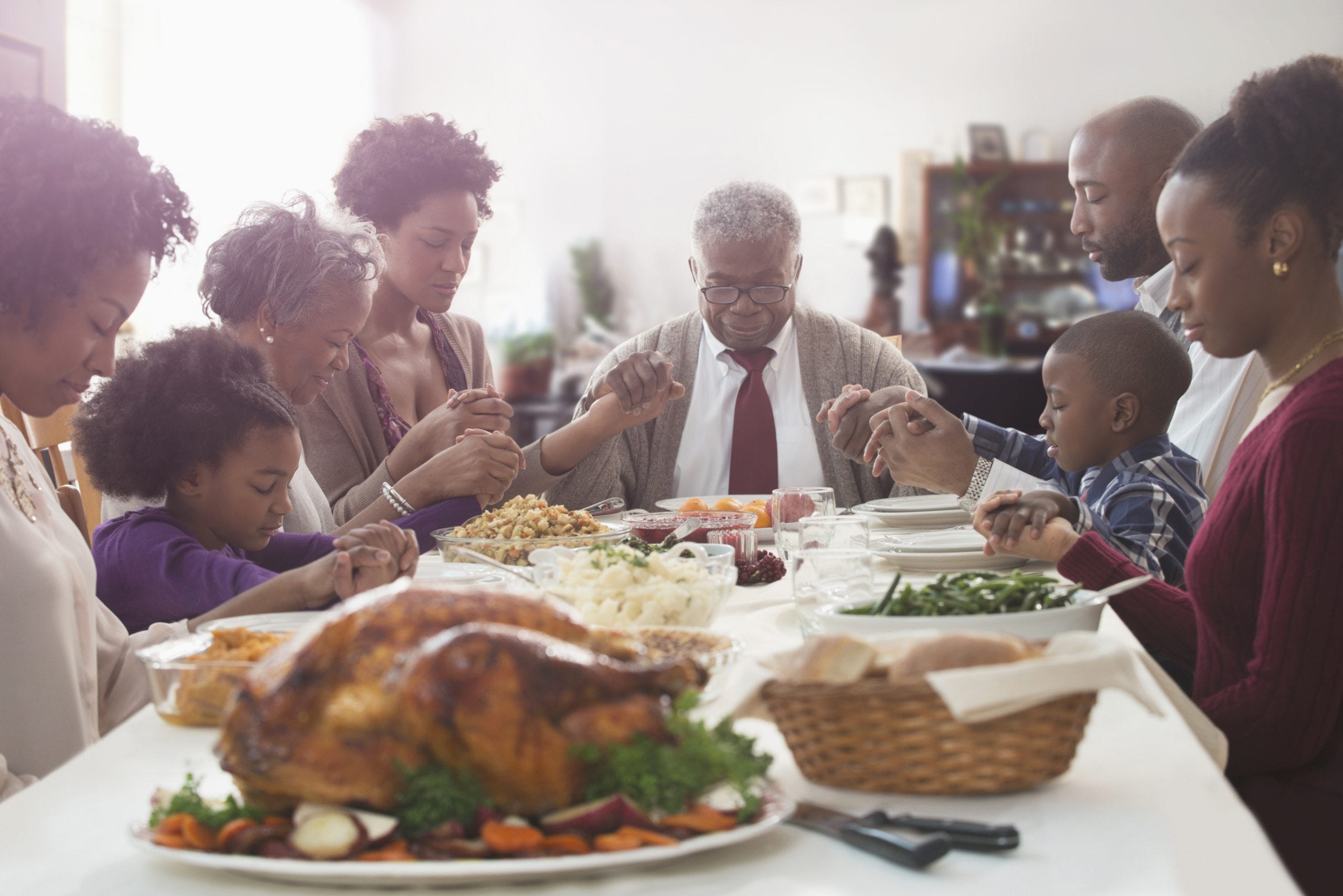
The Courage to Be Grateful
Why We Must Choose a Deeper Posture of Gratitude in Dark Times
In seasons like the one we’re living through—fractured politics, social unrest, global anxiety—it’s easy to believe the darkness is the whole story. We scroll, react, brace ourselves. But that’s not the whole truth. Against the backdrop of Thanksgiving, a peculiar and life-giving contrast emerges: even now, we have so much to be grateful for. And perhaps now more than ever, gratitude is an act of courage.
There is a meaningful difference between saying thanks and being grateful. Thankfulness is momentary. It's the warm feeling we get when someone holds the door, when a friend sends a kind message, or when the mashed potatoes come out just right. It is the external gesture—real, good, and needed. Gratitude, however, is something deeper and sturdier. Gratitude is an interior posture that settles into the bones. It can exist even when circumstances give us nothing obvious to point to. Gratitude is not reactive; it is cultivated. It is a chosen lens, a disciplined way of seeing the world not just as it is, but as it might yet become.
Scripture gives us a window into this distinction, perhaps most clearly in 1 Thessalonians 5:18: “Give thanks in all circumstances; for this is the will of God in Christ Jesus for you.” Not for all circumstances—because no honest person gives thanks for loss, injustice, or hardship—but in all circumstances. Paul is writing to a young church besieged by persecution and instability, a community acquainted with fear. Yet he calls them to gratitude anyway. Why? Because gratitude is not a denial of the darkness; it’s a refusal to let the darkness have the final word.
To “give thanks in all circumstances” is to acknowledge that God’s presence, God’s goodness, and God’s purposes have not evaporated simply because life has grown difficult. Gratitude, here, becomes a form of spiritual resilience. It is a way of tethering ourselves to hope, a way of remembering that even in the broken places, there are embers of grace still burning.
This kind of gratitude is uncomfortable. It asks something of us. It requires us to resist the cynicism that feels so natural and to see the hidden gifts we might otherwise ignore: the friends who check in, the small victories that stitch a day together, the quiet mercies that show up unannounced. Gratitude in dark times is not naïve. It is defiant.
And choosing it—especially now—can reshape our communities. People rooted in gratitude don’t become indifferent to suffering; they become more compassionate, more patient, more attuned to goodness, more willing to stay hopeful. When gratitude becomes a habit, it leaks outward. Homes soften. Workplaces brighten. Churches rekindle their sense of mission. Society gains a few more people who can see possibilities where others see nothing but problems.
So here is the challenge: Choose gratitude as an orientation, not an occasion. Practice it when it’s easy, and cling to it when it feels costly. In a world that trains us to react to the worst, dare to notice the best. The darkness is real, yes—but so is the light. And gratitude is how we learn to see by it. This Thanksgiving, thankfulness will fill a moment. But gratitude can fill a life.


