The Defiance of Faith
How the midwives of Exodus reveal the timeless tension between earthly authority and divine obligation
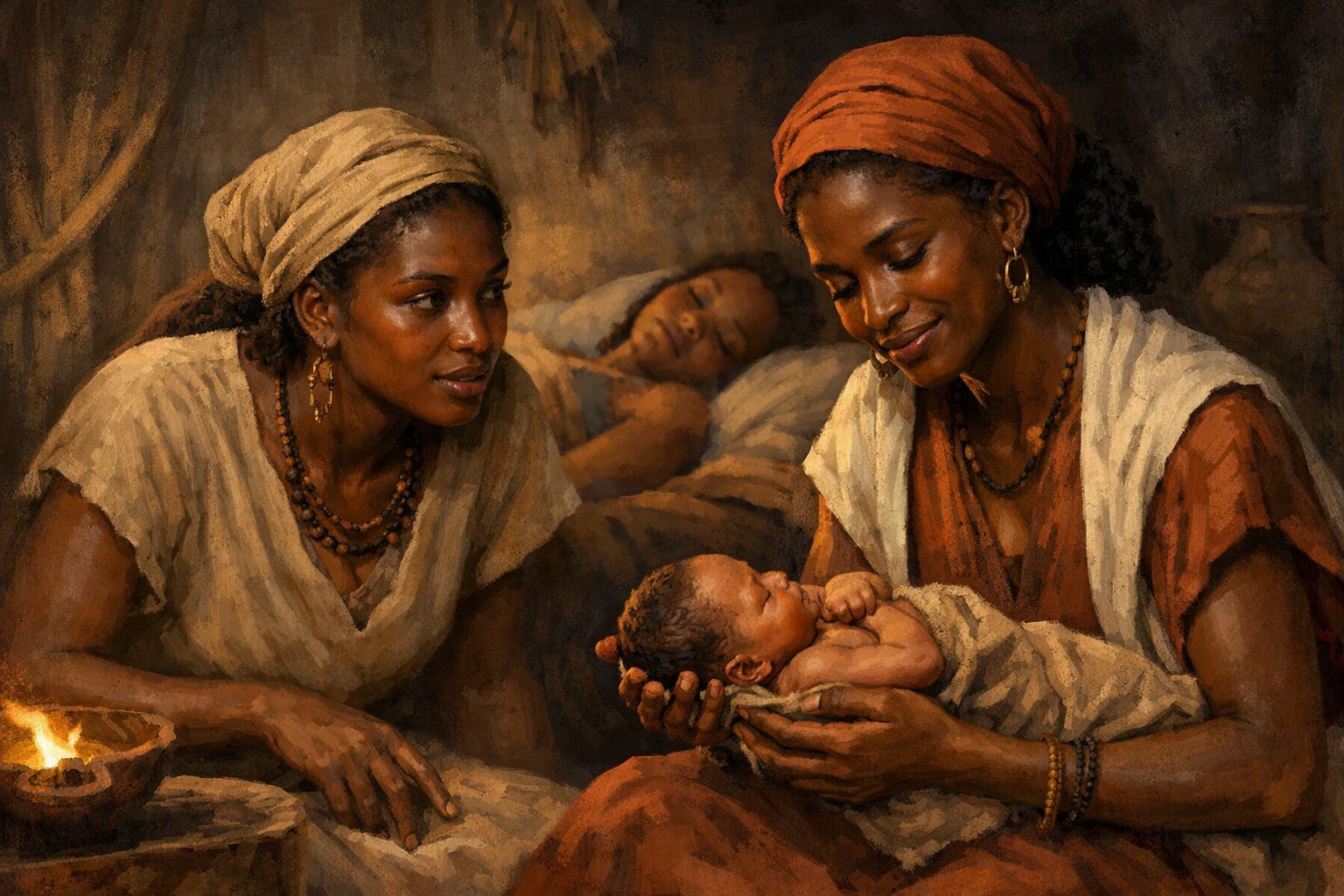
There's a scene in the opening chapter of Exodus that we tend to rush past on our way to the burning bush and the dramatic showdown at the Red Sea. But it deserves our lingering attention, especially now, especially here. Two women, Shiphrah and Puah, receive a direct order from the most powerful man in their world: kill the Hebrew boys as they're being born. The text tells us simply, "But the midwives feared God and did not do as the king of Egypt had commanded them, but let the boys live" (Exodus 1:17).
This is not a story about heroic resistance to distant tyranny. This is a story about ordinary people facing an impossible choice between the law of the land and the law of heaven, and choosing to let the latter trump the former, knowing full well the consequences could be fatal.
The parallels to our current American moment are neither perfect nor neat, but they are present. We live in an age of competing authorities, where citizens are increasingly asked to navigate between governmental demands and deeply held moral convictions. The tensions manifest differently than in ancient Egypt, we're not talking about state-sanctioned infanticide, but the underlying architecture of the dilemma remains: What do you do when the powers that be command what your faith forbids?
Consider three contemporary expressions of this ancient tension. First, there's the healthcare worker asked to participate in procedures they believe constitute the taking of innocent life. Second, there's the small business owner told to facilitate celebrations of unions their faith teaches them not to recognize. Third, there's the parent commanded to affirm ideologies about human identity that contradict what they understand Scripture to teach about how God made us. In each case, ordinary people find themselves at the intersection of Caesar's decree and God's design, forced to choose.
The biblical pattern established by Shiphrah and Puah echoes throughout Scripture. When King Nebuchadnezzar commanded Shadrach, Meshach, and Abednego to bow before his golden image, they replied with respectful clarity: "Our God whom we serve is able to deliver us from the furnace of blazing fire...But even if He does not...we are not going to serve your gods" (Daniel 3:17-18). When the Persian empire forbade prayer to anyone but King Darius, Daniel simply "continued kneeling on his knees three times a day, praying and giving thanks before his God, as he had been doing previously" (Daniel 6:10). When the apostles were commanded to stop preaching about Jesus, Peter answered, "We must obey God rather than men" (Acts 5:29). The pattern is consistent: respectful acknowledgment of authority, clear explanation of the conflict, and then quiet, dignified defiance.
History records secular echoes of this principle. The Haitian rebellion wasn't merely about political independence; it was partly fueled by enslaved people who understood, in their deepest souls, that no human decree could make chattel slavery morally legitimate. The Boston Tea Party emerged from colonists who believed certain impositions violated natural law and divine right. Harriet Tubman and the vast network of the Underground Railroad operated in explicit violation of federal law, the Fugitive Slave Act is one example, because they recognized a higher law that declared human beings were not property to be returned to their "rightful owners." These examples demonstrate that sometimes the most patriotic act is principled resistance to unjust law.
But here we encounter the theological cord that has tied Christians in intellectual knots for two millennia: What about Romans 13? "Every person is to be subject to the governing authorities. For there is no authority except from God, and those which exist are established by God" (Romans 13:1). Paul couldn't be clearer. In a 1998 interview on "Larry King Live," Al Mohler, noted Calvinist and President of the Southern Baptist Theological Seminary, argued that the Bible commanded slaves to obey their masters, and when pressed about runaway slaves like Harriet Tubman, he stated there was "no loophole" in the text for disobeying that mandate. And yet, when we look through out scripture, beyond the narrow subjective arguments of men like Mohler, how do we square this with the midwives' defiance?
The answer requires holding multiple truths in tension, something our age of ideological purity finds nearly impossible. Yes, Christians are called to submit to governing authorities as God's servants "for good" (Romans 13:4). Yes, "when the righteous increase, the people rejoice, but when a wicked person rules, people groan" (Proverbs 29:2), acknowledging that not all rule is equally just. Yes, prophets like Nathan confronted even beloved King David with God's judgment: "You have struck down Uriah the Hittite with the sword...you have despised Me" (2 Samuel 12:9). Yes, Elijah condemned King Ahab: "Have you found me, my enemy?" Ahab asked. "I have found you," Elijah replied, "because you have given yourself over to do evil in the sight of the LORD" (1 Kings 21:20).
The synthesis emerges when we understand that Romans 13 describes the normative pattern of Christian citizenship, not an absolute command that nullifies all other moral obligations. Paul himself violated unjust orders throughout his ministry. The governing authorities are established by God for the punishment of evildoers and the praise of those who do right (Romans 13:3-4). When authorities invert this purpose, when they punish good and reward evil, they step outside their God-ordained role and lose their moral claim to absolute obedience.
This is where Galatians 6:9-10 becomes essential: "Let's not become discouraged in doing good, for in due time we will reap, if we do not become weary. So then, while we have opportunity, let's do good to all people, and especially to those who are of the household of the faith." The call to "do good" supersedes convenience, personal safety, and even legal compliance when the law demands evil.
The lesson for Christians is this: We are to be the most law-abiding citizens in society, right up until the moment we're asked to sin. Then we become the most courageously disobedient. This requires extraordinary wisdom. Not every policy disagreement rises to the level of the midwives' crisis. Not every political frustration justifies rebellion. Christians must distinguish between laws that inconvenience us and laws that compel us to violate God's explicit commands. We must ask: Is this Caesar demanding what belongs to God?
Living under wicked rule requires spiritual maturity. We must pray for those in authority, even, especially when, we believe them wicked (1 Timothy 2:1-2). We must engage in legitimate political processes to advocate for justice. This is being involved in the candidate vetting process and voting matters. We must clearly articulate why we cannot comply when compliance would mean sin, doing so with gentleness and respect. We must be willing to accept the legal consequences of our faithfulness, as the midwives surely understood they might.
And critically, we must remember what motivated Shiphrah and Puah. The text doesn't say they feared Pharaoh's wrath or loved the Hebrew people, though both were surely true. It says they "feared God." This is the heart of the matter. The fear of God must produce the obedience of God. When those align against human authority, we choose God. We do this not out of political ideology, not out of cultural preference, but out of reverent awe before the One who will judge both kings and subjects.
The closing verses of Exodus 1 are instructive: "So God was good to the midwives...and because the midwives feared God, He established households for them" (Exodus 1:20-21). Their faithfulness cost them nothing in the end; it gained them everything. They traded temporary safety under Pharaoh's favor for eternal security under God's blessing.
That's the calculus of faithful defiance. Not reckless, not eager, not triumphalist, but resolute. When the king's decree demands what God forbids, the fear of God compels us to respectfully, clearly, courageously say: I cannot. I will not. And I will trust God with the consequences.
In an age of polarization, this is neither a conservative nor liberal position. It's a Christian position, rooted in the orthodox conviction that God's authority supersedes all others, and that sometimes the most faithful act is the most illegal one. The midwives understood this. Daniel understood this. Peter understood this. And we, if we're serious about following Jesus in a world where kingdoms rise and fall but God's kingdom endures forever, must understand it too.


my God! thank you for this brother 🙏🏿