The Forgotten Voice
Why America Needs Prophetic Preaching Again (Part 1 of 2)
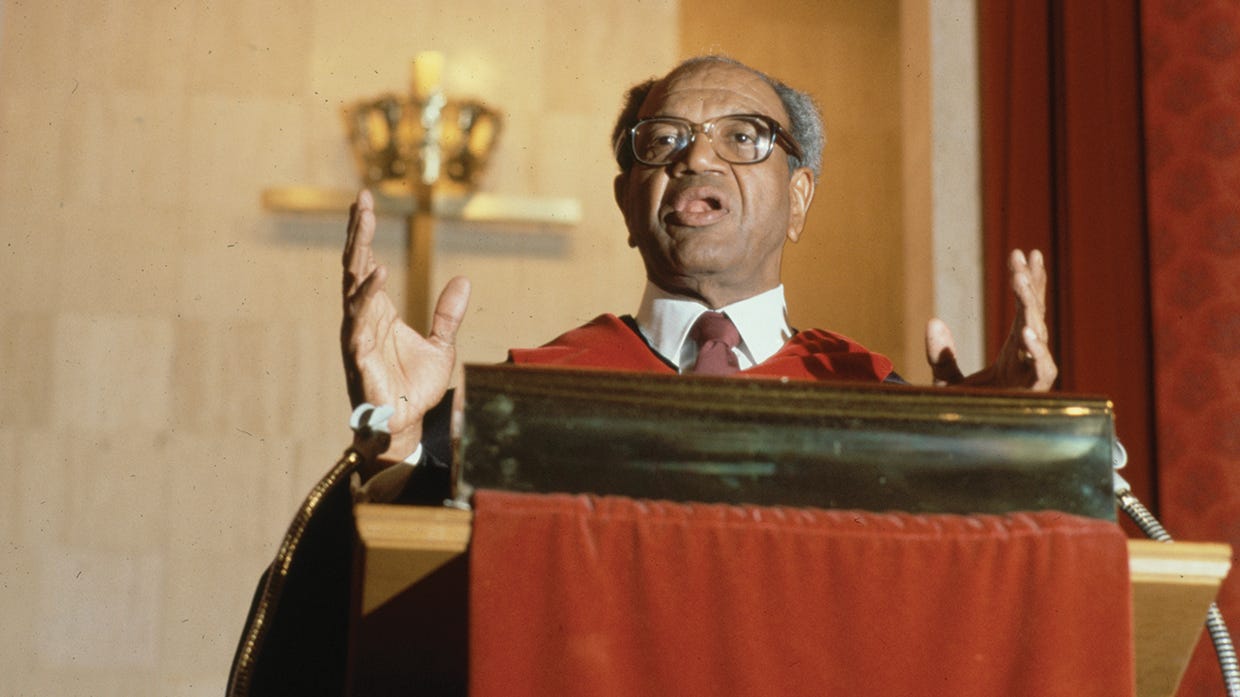
There was a time when the preacher’s voice echoed not merely from the pulpit but from the conscience of the nation. The great voices of faith—Amos in ancient Israel, Micah in Jerusalem’s streets, Martin Luther King Jr. in Montgomery—did not speak to entertain the saints. They spoke to awaken the soul. Their words burned with the conviction that truth still matters, that righteousness still exalts a nation, and that a people cannot indefinitely turn their back on moral reality without consequence.
Today, America has grown increasingly allergic to that kind of preaching. Ours is an age of therapeutic spirituality—one that prizes affirmation over transformation, comfort over conviction. We want our preachers to be gentle life coaches, not prophets of divine encounter. But the prophets remind us: when faith loses its voice, culture loses its conscience.
What the Prophets Still Teach Us
The twelve Minor Prophets—Hosea through Malachi—were not minor in message, only in length. Their words cut across the centuries with unnerving relevance. They lived in a time when religion was fashionable, the economy was strong, and moral rot was spreading beneath the surface. Israel sang her hymns and offered her sacrifices, but her heart was far from God.
Amos thundered against the injustice of a nation that “trampled the poor” while singing songs of worship. Hosea compared Israel to an unfaithful spouse, beloved yet wandering. Habakkuk wrestled with the moral confusion of his age: Why do the wicked prosper? Zephaniah foresaw the collapse of nations and the coming of a righteous remnant. Each voice sang a different note, but together they harmonized into a single refrain: God sees, God cares, and God will act.
Prophetic preaching, in their example, was not about predicting the future—it was about interpreting the present through the eyes of God. It is what homiletics professor Tyshawn Gardner calls “forthtelling.” The prophet stood in the tension between divine holiness and human rebellion, refusing to let people settle for shallow religion or performative morality.
America’s Moral Moment
We, too, live in a time that desperately needs prophetic clarity. Our public square has become a theater of outrage. Politics has replaced morality. Digital tribes have replaced moral communities. Our debates are not about what is true or good but about which side is winning.
Meanwhile, the moral fabric of the nation frays quietly beneath the noise. Families disintegrate. Loneliness metastasizes. Violence becomes routine. Hope feels more like nostalgia than destiny. In such a world, the preacher’s role cannot simply be to soothe the anxious or entertain the faithful. The preacher must once again speak as a prophet—one who loves the nation enough to tell it the truth.
But that kind of truth-telling is dangerous work. Prophetic preaching rarely wins applause. Jeremiah was thrown in a cistern. Amos was banished. Jesus was crucified. Yet each stood firm in the conviction that to speak God’s word faithfully is to offer the only true hope humanity has.
The Temptation of Comfortable Religion
The modern church faces its own crisis of prophetic nerve. Too many pulpits echo the culture rather than confront it. We substitute the call to holiness with vague spirituality. We trade conviction for convenience. Biblical orthodoxy is all but abandoned. We’ve confused popularity with faithfulness.
The prophets remind us that comfort without conviction leads to collapse. When Hosea preached, Israel’s sanctuaries were full, but the nation’s soul was empty. When Amos spoke, the people prospered materially but were impoverished morally. Their religion had become a mirror reflecting their desires rather than a window revealing God’s character.
We are not so different. Our gods have new names—success, freedom, autonomy—but they demand the same sacrifices: family, integrity, community, peace, and salvation. Prophetic preaching exposes those idols, not with anger but with the moral tenderness of a physician diagnosing a deadly disease. It calls us to repentance not out of shame, but out of love.
The Prophetic Hope
Here lies the heart of true prophetic preaching: it weds judgment to hope.
Joel’s locusts became a vision of the Spirit’s outpouring. Habakkuk’s lament became the gospel cry, “The righteous shall live by faith.” Zechariah’s visions pointed to a humble King riding on a donkey—the Christ who fulfills every divine promise.
This is the orthodoxy of prophetic proclamation. It does not end in despair; it ends at the empty tomb, where divine mercy and victory meet. It insists that while God confronts sin, He never abandons His people. It invites a culture on the brink of exhaustion to rediscover the sacred order that makes life possible again.
Why We Need It Now
America’s renewal will not come through political triumphs or cultural wars. It will come through a moral awakening rooted in truth, humility, and grace. Prophetic preaching can light that flame. It can call us to remember that character still counts, that the poor still matter, that the image of God still resides in every person, and that hope is not naive—it is the moral oxygen of the human soul.
A prophetic message is not about shouting louder than the world; it is about speaking truer than the noise. It is the courageous act of interpreting the times through the eternal Word of God and daring to believe that truth, even when unwelcome, still has the power to set us free.
A Final Word
If the prophets were among us today, they would likely not choose sides on cable news. They would call us all—conservative, liberal, and orthodox alike—to return to the God who still demands justice, mercy, and humility. They would remind us that a nation’s greatness is not found in its wealth or weapons, but in its willingness to walk humbly with its God.
Prophetic preaching, then, is not a relic of an ancient world. It is the lifeline of a disoriented one. In an America struggling to remember what is true, what is good, and what is sacred, we need fewer pundits and more prophets. We need fewer slogans and more sermons that burn with the moral clarity of heaven.
The task of prophetic preaching is not to make people comfortable—it is to make them whole.


