The Long Shadow of American Violence
The Minneapolis church shooting forces us to confront our nation's deepest pathology.
On the morning of August 27, 2025, as families gathered for Mass at Annunciation Catholic Church in Minneapolis, two children, ages 8 and 10, were killed as they sat in the pews. Seventeen others were injured, including 14 children and 3 adults. The gunman fired through church windows before taking his own life, shattering not just glass but the sacred peace of a community at prayer.
This tragedy forces us, once again, to confront an uncomfortable truth about American society: we are a nation haunted by the specter of violence, and we have been from our very beginning. The shooting at Annunciation is not an aberration but part of a darker American tradition that we must finally acknowledge and address.
The Original Sin
America's relationship with violence runs deeper than our contemporary debates about gun control or mental health services, though both matter enormously. It is woven into the very fabric of our national story, beginning with the systematic displacement and genocide of Indigenous peoples. The violence was not incidental to American expansion; it was essential to it.
We built our early economy on the systematic brutalization of enslaved Africans, creating wealth through whips and chains while speaking of liberty and justice. After emancipation, when legal slavery ended, organized terror took its place. The Ku Klux Klan and similar groups used lynching, bombing, and intimidation not as random acts of hatred but as systematic tools of social control.
The Red Summer of 1919 saw white mobs attack Black communities across dozens of American cities. In Tulsa in 1921, a prosperous Black neighborhood known as "Black Wall Street" was literally burned from the sky. These were not spontaneous eruptions but organized campaigns of racial terrorism designed to maintain white supremacy through fear.
Sacred Spaces Under Siege
Houses of worship have long been particular targets in this American tradition of violence. In 1963, four little girls were killed when the 16th Street Baptist Church in Birmingham was bombed. Addie Mae Collins, Cynthia Wesley, Carole Robertson, and Denise McNair became martyrs not because they sought confrontation, but because they represented hope for a different kind of America—one that white supremacists could not tolerate.
The pattern continued through the decades: the Charleston shooting at Mother Emanuel AME Church in 2015, the Pittsburgh synagogue attack in 2018, the burning of Black churches across the South. Places meant for prayer, community, and sanctuary become scenes of unthinkable horror.
Now Minneapolis joins this tragic roll call. Children ranging in age from six to 15 were among the injured, along with parishioners in their 80s. The violence spans generations, touching the most vulnerable—the very young and the very old—gathered in a place that should represent safety and spiritual refuge.
The Contemporary Plague
Today's mass shootings represent both a continuation of and a departure from this historical pattern. While the underlying capacity for American violence remains constant, its expression has evolved. The weapons are more efficient, the casualty counts higher, and the randomness more terrifying.
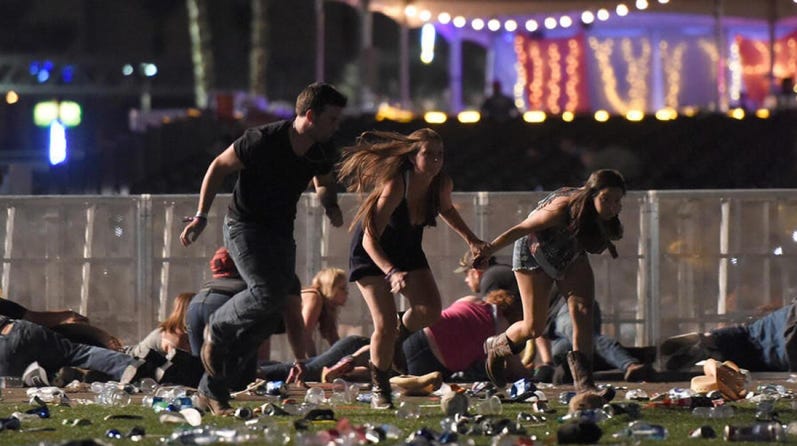
Since Columbine, we have witnessed an epidemic of mass violence that defies easy categorization. Schools, workplaces, concerts, movie theaters—nowhere seems immune. Each shooting spawns familiar cycles of grief, anger, political positioning, and ultimately, inaction. We have become a society that mourns ritualistically but changes reluctantly.
The Minneapolis shooting occurred, tragically, as the fourth deadly shooting the city had seen in roughly 24 hours. This clustering of violence suggests something beyond individual pathology—it points to broader social and cultural forces that we struggle to understand, let alone address.
The Roots of Our Dysfunction
What explains America's unique relationship with violence? Other developed nations have mental health challenges, social media, violent entertainment, and economic inequality. But none experiences mass violence at our scale or frequency.
Part of the answer lies in our founding mythology. We celebrate violence when it serves purposes we deem worthy—revolution, westward expansion, defeating fascism—but then express surprise when that same capacity for violence turns inward. We have created a culture that simultaneously glorifies and condemns force, depending on the context and the perpetrator.
Our political discourse has coarsened to the point where dehumanizing opponents seems normal. Our entertainment industry profits from ever-more-realistic depictions of violence. Our social media algorithms amplify anger and extremism because they generate engagement. We have created an ecosystem where violence feels both inevitable and cathartic.
The Path Forward
Breaking this cycle requires more than policy changes, though those matter. Universal background checks, red flag laws, assault weapons restrictions—all of these can help reduce the carnage. But they address symptoms rather than causes.
We need a deeper reckoning with our national character. This means honest conversations about how violence has shaped American identity. It means acknowledging that white supremacy has been a driving force in American violence, while recognizing that contemporary mass shootings often defy simple racial categorizations.
We need to rebuild the social institutions that once provided meaning, connection, and purpose: families, religious communities, civic organizations, neighborhoods. Loneliness and alienation create fertile ground for extremism and violence.
We need leaders who speak to our better angels rather than our darker impulses. Political rhetoric that treats opponents as enemies worthy of destruction contributes to a climate where violence seems justified.
Most fundamentally, we need to decide what kind of nation we want to be. Do we want to remain a society where children practice active shooter drills and parents fear sending their children to school or church? Or do we want to become a nation that truly values the safety and dignity of all its citizens?
A Choice Before Us
As Minneapolis grieves and the families of those killed and wounded begin their long journeys toward healing, the rest of us face a choice. We can offer thoughts and prayers, update our social media profiles, engage in familiar political battles, and then wait for the next tragedy. Or we can finally confront the truth that American violence is not a bug in our system but a feature—one that we have the power to change.
The children killed in Minneapolis yesterday morning will never grow up to see the America they might have helped create. The least we can do is ensure their deaths contribute to creating the America they deserved to live in: one where houses of worship are sanctuaries, where schools are places of learning rather than potential battlegrounds, and where violence is neither glorified nor tolerated as the price of freedom.
The long shadow of American violence has darkened too many lives for too many centuries. It is time to step into the light.
This tragedy represents a real threat to the fabric of our democratic society. When violence becomes normalized, when sacred spaces are violated, when children cannot safely attend religious services, we lose something essential about what makes America worth preserving. The threat is not just to individual lives—though each loss is immeasurable—but to our collective capacity to maintain the trust and social cohesion that democracy requires. We cannot build a just society on a foundation of fear.


