The Missed Generation
How the American Church Lost a Generation and How It Can Find Its Way Back
"Where are all the young people?"
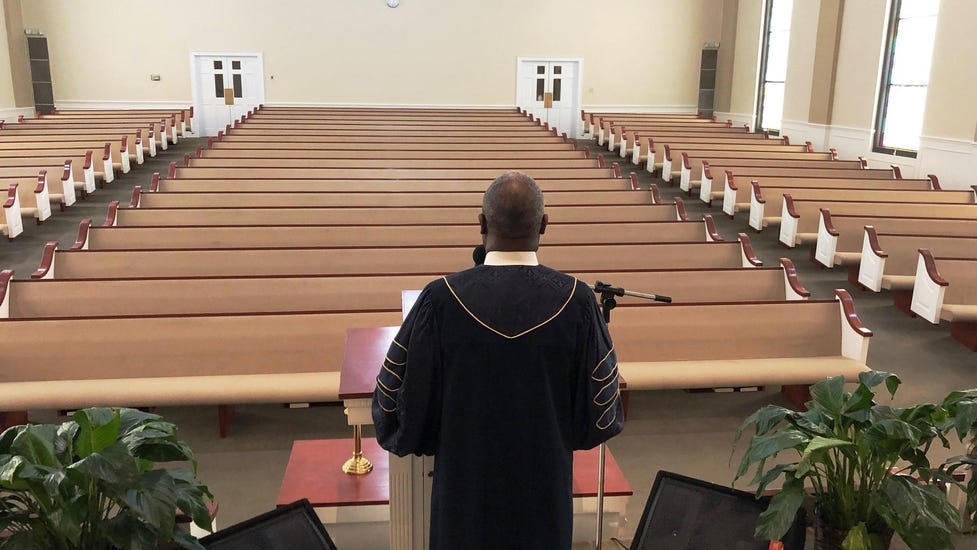
It is a catch-all expression used by an older, retired generation of congregants for a generation of adults that span 25–49. They ask it quietly, over coffee and casserole dishes in fellowship halls that once echoed with children's laughter. They ask it in trustee meetings where the budget barely balances. They ask it as they look down pews that once required ushers and extra folding chairs, now offering something closer to elbow room than spiritual electricity.
The question is sincere. It is also one of the most consequential diagnostic inquiries the American church faces in this generation. Because the people they are asking about did not vanish into thin air. They went somewhere. They made decisions. They were, in many cases, shaped by the church itself before they left it, and what they experienced shaped their reasons for going.
Across the country, congregations that once averaged 1,200 members or more, institutions that anchored neighborhoods, birthed leaders, funded missions, and served as civic pillars, now find themselves struggling to survive. Average Sunday attendance in many of these churches has fallen below 150. The endowments are shrinking. The staff has been reduced. The building, once filled to capacity at 11 a.m., now swallows the remnant that remains.
This is not merely a sociological curiosity. It is a spiritual emergency. And it demands more than lament. It demands understanding.
"Train up a child in the way he should go; even when he is old he will not depart from it." Proverbs 22:6
"I have no greater joy than to hear that my children are walking in the truth." 3 John 1:4
I. WHAT HAPPENED
The story of how the American church lost this generation is not a single story. It is layered, complex, and often painful to tell. But telling it honestly is the first act of stewardship.
Begin with the obvious: culture shifted. The generation between 25 and 49 today, millennials and older members of Gen Z, came of age in an era of radical institutional distrust. They watched political leaders disappoint, financial systems collapse, and, critically, religious institutions scandalize. From the Catholic priest abuse crisis to the Southern Baptist Convention's decades of cover-ups to the spectacular moral failures of celebrity pastors in the evangelical world, this generation absorbed the implicit message that organized religion was not what it claimed to be.
But that is only the headline. The deeper story is subtler. Many churches failed this generation not through scandal, but through something quieter and perhaps more corrosive: irrelevance dressed in the robes of tradition. As a result, the disconnect led to a generation putting their energy elsewhere. Careers, evening and weekend entertainment, materialism, and travel became the outlets where time and pursuits are now spent.
For decades, many mainline and evangelical congregations conflated cultural familiarity with gospel faithfulness. The music, the programming, the language, the social assumptions of mid-century American Christianity were preserved with a kind of sacred ferocity, as if the 1952 Order of Worship were itself a matter of doctrinal necessity. The generation coming of age in the 1990s and 2000s sensed the disconnection. They sat in services that seemed designed for their grandparents, received answers to questions they weren't asking, and were left without tools to engage the questions they were.
"See to it that no one takes you captive by philosophy and empty deceit, according to human tradition, according to the elemental spirits of the world, and not according to Christ." Colossians 2:8
There was also, in many congregations, a profound failure of mentorship. Older generations who had been spiritually formed through years of devotional life and community rarely transmitted the substance of that formation. They passed on attendance habits. They passed on moral codes. But they struggled to pass on the living faith underneath, the kind Paul describes in 2 Timothy 2:2: "What you have heard from me in the presence of many witnesses entrust to faithful men, who will be able to teach others also."
What this generation received, too often, was religion as social contract rather than Christ as living Lord. And when the social contract offered better terms elsewhere, in the brunch culture, in the wellness movements, in the curated spiritual-but-not-religious identity, they renegotiated. The church did not lose this generation because it was too faithful. It lost them because it mistook familiarity for faithfulness.
There is also the complicated reality of how certain churches engaged, or failed to engage, justice. The generation between 25 and 49 came of age watching persistent racial injustice, economic inequality, and global suffering. Many found that their churches offered them either silence or platitudes. They were told to wait. They were told not to mix politics and pulpit. They were given the impression that the God who spoke through Amos, "Let justice roll down like waters, and righteousness like an ever-flowing stream" (Amos 5:24), had grown quieter in their era. So they left. And they took their children with them.
II. WHERE DID THEY GO?
Some of them found other churches, younger, faster-growing congregations that traded the inherited liturgy for a more culturally nimble expression of the faith. Church growth in America has not stopped; it has largely migrated. The mega-church and multi-site movements absorbed significant numbers of this demographic, offering professional production, felt-need programming, and a Christianity that met them closer to where they were.
But even those churches are beginning to show cracks. The celebrity pastor era produced both conversion and disillusionment. More than a few of those younger, shinier congregations have endured their own leadership crises, their own departures, their own empty seats.
A significant portion of the missing generation has simply stopped attending church at all. Pew Research and Gallup surveys from the past decade document the rise of the "Nones,"Americans who claim no religious affiliation, with the 25–49 demographic disproportionately represented. Some describe themselves as spiritual but not religious. Others have moved toward a practical atheism: not militant, simply indifferent.
Still others occupy a kind of theological limbo. They believe in God. They believe in Jesus, at some level. They pray in moments of crisis. But they have not found a church home that felt worth the cost of sustained commitment. They are, in the language of the New Testament, like "sheep without a shepherd" (Matthew 9:36), not lost in the sense of being villainous, but wandering in the sense of being unanchored.
"When he saw the crowds, he had compassion for them, because they were harassed and helpless, like sheep without a shepherd." Matthew 9:36
And then there is the most uncomfortable category: those who left because of something a church or a pastor did. A wound received at the altar. A community that closed ranks rather than offered grace. A leader who preached forgiveness but practiced control. These men and women carry real spiritual injuries, and the church that hurt them is often the last institution they trust with the news that they are hurting.
III. HOW DID SO MANY CHURCHES GET HERE?
The structural answer is gradual. Like a ship that has been slowly taking on water, many congregations did not notice the depth of the problem until they were already listing. The Baby Boomer generation that filled those large congregations in the 1970s and 80s aged in place. Their children and grandchildren were enrolled in the programs, confirmed in the faith, and then, quietly, released into a world the church had not prepared them for.
Churches made strategic bets on programs, youth groups, Sunday school curricula, VBS, that were activity-rich and relationship-thin. They invested in facilities at precisely the moment the culture was beginning to question whether a building was worth the price of admission. They hired specialists where they needed generalists: youth ministers who related to teenagers but did not connect to young adults, worship leaders who curated experiences but did not cultivate disciples.
There was, beneath all of it, a failure of theological courage. Churches that should have been shaping culture began mirroring it. Sermons grew shorter. Demands grew lighter. The historic doctrines of the faith, sin, repentance, atonement, resurrection, the coming Kingdom, were softened at their edges or avoided altogether, in the hope that a less confrontational Christianity would retain a generation that was, paradoxically, hungry for something that cost something.
"For the time is coming when people will not endure sound teaching, but having itching ears they will accumulate for themselves teachers to suit their own passions." 2 Timothy 4:3
This is not a critique aimed at any one tradition. Conservative churches lost young people by being culturally rigid and morally tribal. Progressive churches lost them by offering affirmation without transcendence. The generation between 25 and 49 is, for all its complexity, a generation that can smell inauthenticity at twenty paces. They did not need a church that agreed with them. They needed a church that believed something with enough conviction to invite them into it.
They did not need a church that agreed with them. They needed a church that believed something.
IV. NOW WHAT? THE PATH TOWARD REVITALIZATION
Here is where the conversation in many struggling congregations breaks down. The diagnosis produces grief, and grief, when it has nowhere constructive to go, produces either paralysis or nostalgia. Neither will rebuild a church. What follows is not a program. It is a posture, a set of practices drawn from theology, sociology, and the hard-won wisdom of congregations that have found their way back.
1. Repent Before You Rebrand
The first act of revitalization is not a marketing study or a building renovation. It is corporate examination. The church that wants to reclaim a generation must first ask, with genuine humility, whether it played a role in losing them. This is not self-flagellation. It is the kind of honest reckoning that the prophets modeled, Nehemiah sitting in sackcloth over Jerusalem's broken walls, Daniel confessing the sins of his people as though they were his own (Daniel 9:4–5). A congregation that acknowledges its failures creates the moral credibility necessary to begin again.
"I prayed to the Lord my God and made confession, saying, 'O Lord, the great and awesome God... we have sinned and done wrong.'" Daniel 9:4–5
2. Recover the Depth of the Doctrine
Declining churches do not need less theology. They need more of it, preached with clarity, taught with rigor, and embodied with integrity. The generation between 25 and 49 is not allergic to conviction; it is allergic to the performance of conviction. Preach the full counsel of God (Acts 20:27). Do not apologize for the resurrection, or the exclusivity of Christ, or the reality of sin and its consequences. This generation has been offered a thousand versions of self-help spirituality. The church's irreplaceable offering is the gospel, the actual, historic, costly, life-altering good news that God became flesh, bore our sin, was crucified, and rose from the dead.
3. Rebuild Around Relationships, Not Programs
The most effective revitalization stories share a common thread: small groups, mentorship structures, and intentional cross-generational community. The New Testament church did not grow through weekend attractional events. It grew through households, through the daily rhythm of breaking bread, prayer, teaching, and shared life (Acts 2:42–47). A congregation that wants to retain the 25–49 demographic must build the infrastructure of real belonging: dinner tables, not stages; conversations, not content.
"And they devoted themselves to the apostles' teaching and the fellowship, to the breaking of bread and the prayers."
Acts 2:42
4. Raise Up Indigenous Leaders
No revitalization lasts long if it is led entirely by those who experienced the decline. The church must identify, invest in, and empower the leaders within the 25–49 demographic, giving them real authority, real responsibility, and real stakes in the congregation's future. This means older leaders doing what Elijah did for Elisha: not just mentoring in the abstract, but passing the mantle (1 Kings 19:19–21). It means boards and elder councils that reflect the generational diversity the church hopes to cultivate.
"Elijah... found Elisha the son of Shaphat... and cast his cloak upon him." 1 Kings 19:19
5. Embrace Cultural Fluency Without Cultural Captivity
The church does not need to become the culture to reach it. But it does need to understand it. This means learning the language, the anxieties, the aspirations, and the skepticisms of the generation it hopes to reach, and then speaking the ancient gospel into those contours with both faithfulness and imagination. Paul did not ask the Athenians to become Jews before he could reach them. He found the altar to the unknown god and introduced them to the One who was not unknown (Acts 17:22–31). Cultural engagement is not compromise; it is evangelism.
7. Plan for a Long Obedience
Church revitalization is not a campaign. It is a reformation. Eugene Peterson's phrase, "a long obedience in the same direction," captures the disposition required. Congregations that have declined over twenty years will not rebuild in two. The leadership that commits to this work must be prepared to plant and water without always seeing the harvest (1 Corinthians 3:6–7). They must celebrate incremental faithfulness, measure health rather than only headcount, and trust that the God who raised Jesus from the dead is still, today, in the business of resurrection.
"I planted, Apollos watered, but God gave the growth. So neither he who plants nor he who waters is anything, but only God who gives the growth." 1 Corinthians 3:6–7
V. A WORD OF HOPE
The church has been here before. Not in precisely this cultural moment, that is unique to our era. But the experience of a scattered, diminished, seemingly defeated community of faith looking at empty space where their people used to be, that is not new.
Ezekiel stood in a valley of dry bones and heard God ask him: "Son of man, can these bones live?" His answer is the right one for every pastor, elder, and lay leader staring at a half-empty sanctuary: "O Lord God, you know" (Ezekiel 37:3). It is an answer of honest uncertainty married to defiant trust. It does not pretend that the bones are not dry. But it refuses to give the last word to the drought.
"He said to me, 'Son of man, can these bones live?' And I answered, 'O Lord God, you know.'" Ezekiel 37:3
The God who spoke to dry bones and raised up an army is the same God who looks at the struggling congregation, the graying membership roll, the quiet fellowship hall, and sees not a relic but a remnant. And remnants, in the economy of God, are not endings. They are seeds.
The question "where are all the young people?" is the right question to be asking. What matters now is whether the church will be honest enough, humble enough, and faithful enough to let the answer, in all its complexity and discomfort, lead it somewhere new.
The pews can fill again. Not because the church marketed itself more cleverly, but because it recovered something it had set down along the way: the scandalous, world-altering, life-interrupting truth that Jesus Christ is Lord, and that truth, proclaimed in love and embodied in community, is still more than enough.
"Behold, I am doing a new thing; now it springs forth, do you not perceive it?" — Isaiah 43:19


