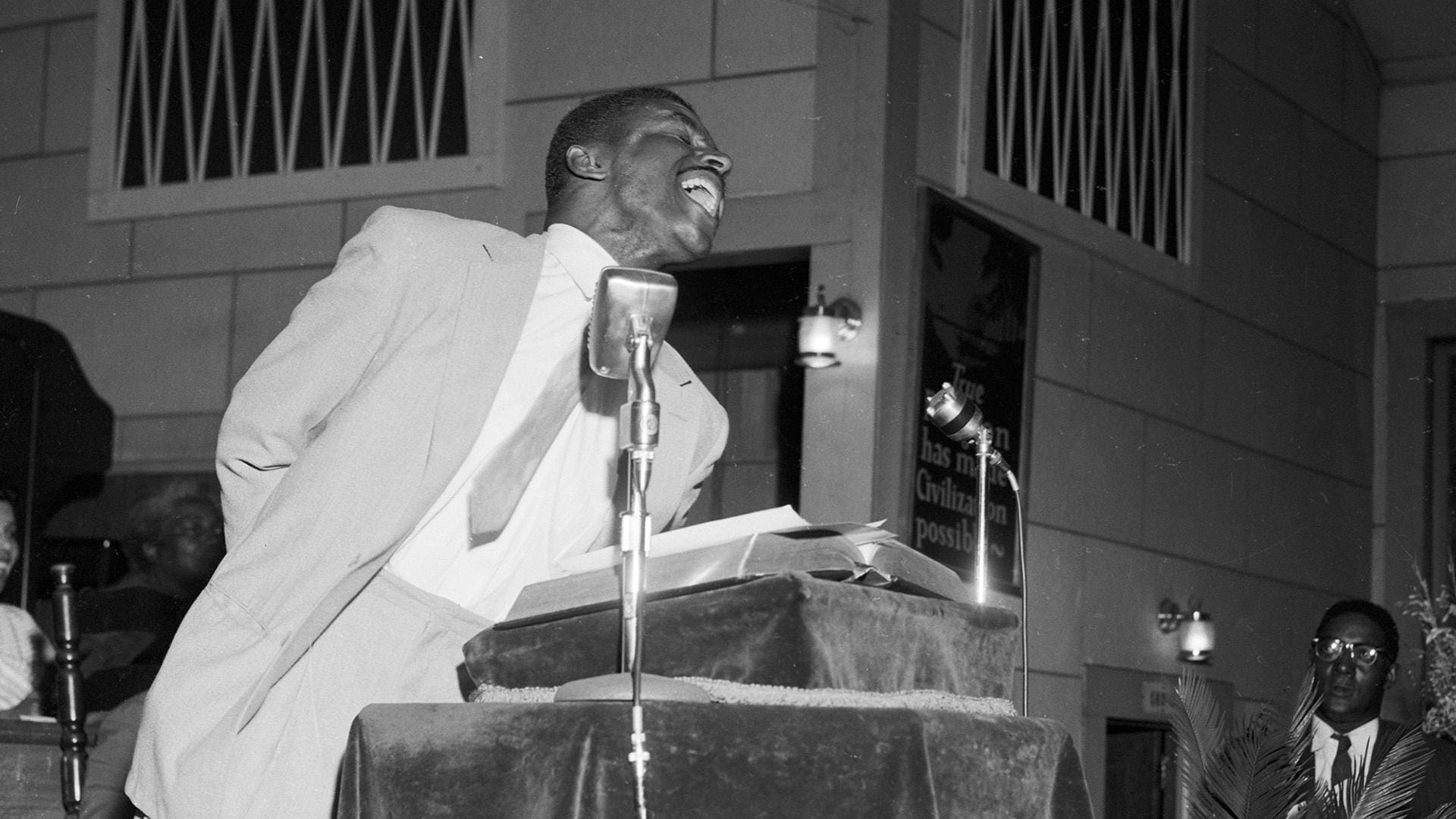
The Prophets We Need
A Call for Moral Courage in the American Pulpit (Part 2 of 2)
There's a particular kind of minister who has become all too common in American churches: the one who mistakes niceness for grace, who confuses cultural relevance with prophetic witness, who delivers sermons that comfort without convicting, that affirm without transforming. They speak in therapeutic abstractions about "living your best life" or "finding your purpose," while carefully avoiding anything that might challenge the congregation's political assumptions, economic practices, or moral compromises.
Meanwhile, our nation convulses with moral conpfusion. We've sorted ourselves into tribal camps where truth is whatever serves our team. We've elevated entertainment over education, outrage over understanding, winning over wisdom. Our political discourse has devolved into mutual demonization. Our economic system produces stunning prosperity alongside crushing inequality. We've weaponized social media to destroy reputations and silence dissent. And through it all, the American church has often responded with either cultural capitulation or tribal partisanship—becoming indistinguishable from the very divisions tearing our society apart.
What we desperately need, in this moment of civic and spiritual crisis, is something the ancient Israelites needed in their own time of national decline: prophetic preaching. Not the cartoonish version that traffics in apocalyptic conspiracies or self-righteous condemnation, but the real thing—the kind embodied in those twelve minor prophets whose words have echoed across millennia precisely because they spoke divine truth to human power, comfort, and compromise.
The Prophetic Voice We've Lost
Consider Amos, that shepherd from Tekoa who had the audacity to travel north to Israel during a time of unprecedented prosperity and religious fervor. The economy was booming. The temples were full. The sacrifices were abundant. Everything looked great, at least from certain zip codes.
Then Amos opened his mouth: "You trample on the poor and force him to give you grain... You hate the one who upholds justice in court and detest the one who tells the truth" (Amos 5:11-12). He looked at their packed religious festivals and declared what God thought of them: "I hate, I despise your religious festivals; your assemblies are a stench to me... But let justice roll on like a river, righteousness like a never-failing stream" (Amos 5:21, 24).
This wasn't political partisanship. Amos wasn't campaigning for a particular economic policy or endorsing a candidate. He was doing something far more destabilizing: holding up a mirror that showed the disconnect between Israel's religious practice and its ethical life, between its worship on the Sabbath and its exploitation during the week.
Or consider Hosea, asked by God to marry an unfaithful woman as a living symbol of Israel's spiritual adultery. His personal humiliation became prophetic theater, demonstrating how God felt about a people who claimed covenant faithfulness while running after every cultural idol, every economic advantage, every political alliance that promised security apart from trust in God.
"When Israel was a child, I loved him, and out of Egypt I called my son," God says through Hosea. "But the more they were called, the more they went away from me... My people are determined to turn from me" (Hosea 11:1-2, 7). Yet even in judgment, mercy intrudes: "How can I give you up, Ephraim? How can I hand you over, Israel?... My heart is changed within me; all my compassion is aroused" (Hosea 11:8).
This is the prophetic dialectic we've largely abandoned in contemporary preaching: the capacity to hold both judgment and mercy, both critique and compassion, both the severity of sin's consequences and the sufficiency of God's grace.
Our Contemporary Evasions
In our current moment, the American pulpit faces several temptations that mirror ancient Israel's evasions of prophetic truth.
The Therapeutic Temptation: Like Israel's false prophets who cried "Peace, peace" when there was no peace, many contemporary preachers have turned Christianity into a self-help program, a spiritual technology for personal fulfillment. The gospel becomes about feeling better rather than becoming better, about God serving our purposes rather than us serving His. Micah's question haunts this approach: "Will the LORD be pleased with thousands of rams, with ten thousand rivers of olive oil?" No, he answers. What God requires is justice, mercy, and humility (Micah 6:7-8)—outcomes that require transformation, not just affirmation.
The Tribal Temptation: The prophets stood apart from the political factions of their day, speaking truth to both kings and commoners, both Israel and Judah. Today's preachers often face pressure to baptize one political tribe's entire platform as "biblical," whether that's progressive social policies or conservative cultural positions. But the prophets refused such neat alignments. They condemned both religious hypocrisy and social injustice, both sexual immorality and economic exploitation, both personal sin and systemic evil.
When Zephaniah announced judgment, he indicted multiple failures simultaneously: "The officials within her are roaring lions; her rulers are evening wolves... Her prophets are unprincipled; they are treacherous people. Her priests profane the sanctuary and do violence to the law" (Zephaniah 3:3-4). The corruption was comprehensive, crossing all institutional and ideological lines.
The Prosperity Temptation: Haggai confronted a post-exilic community that had rationalized its spiritual lethargy through economic concerns. "Is it a time for you yourselves to be living in your paneled houses, while this house remains a ruin?" he asked (Haggai 1:4). They had put personal comfort ahead of God's priorities, and the result was paradoxical scarcity despite constant striving: "You have planted much, but harvested little... You earn wages, only to put them in a purse with holes in it" (Haggai 1:6).
How applicable to contemporary America, where we've achieved unprecedented material prosperity while experiencing epidemic levels of anxiety, depression, and purposelesslessness. We've paneled our houses beautifully while allowing our souls to remain in ruins.
The Comfortable Silence: Perhaps most perniciously, many preachers have simply chosen silence on controversial matters, fearing they'll alienate congregants, threaten giving, or spark division. But as Habakkuk discovered, silence in the face of injustice is its own form of complicity. "How long, LORD, must I call for help, but you do not listen? Or cry out to you, 'Violence!' but you do not save? Why do you make me look at injustice? Why do you tolerate wrongdoing?" (Habakkuk 1:2-3).
The prophetic preacher cannot remain silent about what grieves God—whether that's abortion or poverty, sexual exploitation or economic injustice, racism or religious hypocrisy, tribalism or materialism.
What Prophetic Preaching Requires
The minor prophets teach us that genuine prophetic preaching demands several things often absent from contemporary pulpits.
First, it requires theological courage. The prophets spoke unpopular truths to powerful people because they feared God more than they feared human rejection. Jeremiah was thrown in a cistern. Amos was told to go home. Hosea was humiliated. Yet they spoke because, as Amos put it, "The lion has roared—who will not fear? The Sovereign LORD has spoken—who can but prophesy?" (Amos 3:8).
Today's preacher must be willing to lose members, face criticism, and endure misunderstanding for the sake of faithfulness. This is not the same as being needlessly provocative or enjoying conflict. It's the burden of speaking truth when silence would be more comfortable.
Second, it requires contextual intelligence. The prophets knew their cultural moments intimately. Joel interpreted a locust plague. Nahum understood Assyrian brutality. Malachi diagnosed post-exilic spiritual lethargy. They connected divine truth to contemporary reality with specificity and insight.
The contemporary preacher must similarly understand the cultural currents, technological disruptions, economic pressures, and political dynamics shaping congregants' lives. You cannot speak prophetically to a moment you don't understand. This requires reading widely, listening carefully, and thinking deeply about how the gospel addresses not just individual souls but social structures, not just personal morality but collective sin.
Third, it requires personal integrity. The prophets embodied their messages. They couldn't call others to what they themselves evaded. When Jonah tried to flee God's call, he found himself in the belly of a fish. When Habakkuk questioned God's justice, he had to wrestle honestly with his own doubts before arriving at faith: "Yet I will rejoice in the LORD, I will be joyful in God my Savior" (Habakkuk 3:18).
The preacher who calls a congregation to generosity must be generous. The one who preaches about racial reconciliation must pursue it personally. The one who condemns sexual immorality must maintain sexual purity. Hypocrisy doesn't just undermine the message; it perverts it into its oppopposit.
Fourth, it requires hope rooted in God's character. The prophets never left their hearers in despair. Even the harshest judgments contained glimpses of restoration. Hosea promised, "I will heal their waywardness and love them freely" (Hosea 14:4). Joel declared, "I will repay you for the years the locusts have eaten" (Joel 2:25). Amos concluded with vineyards replanted and cities rebuilt (Amos 9:14).
This hope wasn't optimism about human nature or progress. It was confidence in God's redemptive purposes. As Zechariah heard repeatedly in his night visions: "'Not by might nor by power, but by my Spirit,' says the LORD Almighty" (Zechariah 4:6).
The Hope of the Messianic King
And here we arrive at the deepest truth the prophets whispered, the secret they only partially understood but which gives prophetic preaching its ultimate warrant and hope: God Himself would come to rescue what human effort could never repair.
Micah saw it: "But you, Bethlehem Ephrathah, though you are small among the clans of Judah, out of you will come for me one who will be ruler over Israel, whose origins are from of old, from ancient times" (Micah 5:2). A king from an insignificant town, whose reign would be unlike any earthly kingdom.
Zechariah glimpsed it: "Rejoice greatly, Daughter Zion! Shout, Daughter Jerusalem! See, your king comes to you, righteous and victorious, lowly and riding on a donkey" (Zechariah 9:9). A conquering king who arrives in humility, whose victory comes through vulnerability.
Malachi promised it: "See, I will send the prophet Elijah to you before that great and dreadful day of the LORD comes. He will turn the hearts of the parents to their children, and the hearts of the children to their parents" (Malachi 4:5-6). A messenger who would prepare the way, a reconciler who would heal what was broken.
These prophecies converge in Jesus of Nazareth, who didn't just speak prophetically but was the Prophet—the Word made flesh. He was Hosea's faithful husband reclaiming His bride. He was Amos's justice rolling like a river. He was Jonah's sign of death and resurrection. He was Micah's ruler from Bethlehem. He was Zechariah's humble king and pierced savior. He was Malachi's messenger of the covenant.
What the prophets could only announce, Christ accomplished. Where they could only diagnose sin, He could forgive it. Where they could promise future restoration, He inaugurated the kingdom. Where they spoke words from God, He spoke as God.
And this changes everything about prophetic preaching in the Christian context.
We don't simply rail against injustice—we point to the One who will one day make all things right. We don't merely condemn sexual sin—we proclaim the Bridegroom who pursues His beloved with relentless grace. We don't just demand righteousness—we announce the One who became sin for us that we might become the righteousness of God in Him. We don't simply warn of judgment—we declare the Lamb who bore judgment in our place.
The Messianic King transforms prophetic preaching from mere social criticism into gospel proclamation. It's no longer just "You must change" but "He can change you." Not just "God is angry" but "God is reconciling all things to Himself." Not just "Judgment is coming" but "Mercy triumphs over judgment in Christ."
This hope doesn't make prophetic critique less necessary—it makes it more compelling. When we know the end of the story, when we've seen the victory already won at Calvary and the empty tomb, we can speak hard truths without despair. We can name sin seriously because we know grace is more serious still. We can call people to radical discipleship because we know the Spirit who empowers it. We can challenge comfortable religion because we've encountered the uncomfortable Christ who won't leave us as we are.
A Challenge to the Pulpit
So here's my challenge to pastors, priests, and preachers across America: Recover the prophetic voice.
Stop worrying so much about keeping people happy and start caring more about keeping them faithful. Stop measuring success by attendance numbers and start measuring it by transformed lives, by justice pursued, by mercy shown, by humility cultivated.
Preach the whole counsel of God, not just the parts that fit comfortably within your congregation's political preferences or cultural assumptions. Name specific sins—the ones that pervade your particular community, whether that's racism or abortion, greed or gossip, nationalism or narcissism, exploitation or indifference.
Speak truth about the idols of our age: the worship of success and status, the addiction to digital distraction, the elevation of sexual desire to the level of identity, the reduction of human beings to their economic utility, the sorting of people into "us" and "them" based on tribal markers rather than the imago Dei.
But don't stop with critique. Point relentlessly toward Christ—the Prophet who speaks, the Priest who intercedes, the King who reigns. Proclaim that in Him, the justice of Amos and the mercy of Hosea kiss. In Him, the holiness that demands judgment and the love that offers redemption meet at the cross. In Him, there is hope for the self-righteous Pharisee and the obvious sinner, for the religious and the irreligious, for those who've kept all the rules and those who've broken them all.
Tell them about the kingdom that's already here but not yet fully realized, where the first are last and the last first, where power is exercised through service and greatness measured by humility, where the poor are blessed and the meek inherit the earth, where those who hunger for righteousness are satisfied and the pure in heart see God.
Call them to lives that look radically different from the surrounding culture—marked by generosity in a greedy age, forgiveness in a vengeful time, truth-telling in an era of spin, faithfulness in a culture of convenience, community in a society of isolation, hope in a cynical moment.
And when they fail—when we all fail, because we will—point them again to the One who became sin for us, who bore our judgment, who offers not just forgiveness but transformation, not just pardon but power, not just mercy but newness of life.
The American church doesn't need more entertainers in the pulpit. We don't need more therapists or motivational speakers or political operatives or cultural commentators. We need prophets—gripped by God's Word, broken by God's holiness, transformed by God's grace, and compelled by God's love to speak truth that confronts, challenges, convicts, and ultimately converts.
We need preachers who will stand like Amos in the gate and cry, "Let justice roll on like a river!" We need those who will embody Hosea's wounded love, pursuing the unfaithful with relentless grace. We need Habakkuk's honest wrestling, Joel's call to repentance, Micah's humble walking with God, Haggai's exhortation to priorities, Zechariah's visions of restoration, and Malachi's confrontation of spiritual apathy.
Most of all, we need proclaimers of Jesus Christ—the true and better Prophet whom all the prophets anticipated, the Messianic King in whom all their promises find their "yes and amen," the suffering Servant who became the victorious Lord, the crucified God who conquered death.
This is the hope we can offer a despairing nation, a divided church, a confused generation. Not that we'll get our politics right or our culture wars won, not that America will be great again or progressivism will finally triumph, but that Christ is King, His kingdom is coming, and nothing—not death or life, not the present or the future, not height or depth, nor anything else in all creation—can separate us from the love of God that is in Christ Jesus our Lord.
Give the people that hope. Give them the only hope that won't disappoint. Give them Jesus. That's the prophetic word we need. That's the call I believe the Spirit is issuing to the American pulpit in this hour. Will we have the courage to answer it?


