The Baptist Reckoning
Why America's Largest Protestant Tradition Can't Avoid the Great Realignment

There's a pattern emerging in global Christianity that American Baptists can no longer afford to ignore—not because it's fashionable to discuss church politics, but because the very soul of a tradition is at stake. Walking through the corridors of any mainline Protestant gathering these days, you can feel the tension: the careful avoidance of certain topics, the knowing glances exchanged when someone mentions "biblical authority," the exhausted sighs of those who've fought these battles for decades.
I've spent enough time engaged with church history to recognize when a religious movement is experiencing what the sociologists call "institutional fracture." We've watched it happen across the Anglican Communion, where African, Asian, and South American bishops stood firm while their Western counterparts embraced positions their grandparents would have found unrecognizable. We've witnessed it in the Methodist split, where the Global Methodist Church emerged not from spite, but from a conviction that "All Scripture is given by inspiration of God, and is profitable for doctrine, for reproof, for correction, for instruction in righteousness" (2 Timothy 3:16) meant something specific and non-negotiable. Now that same fault line runs directly through Baptist life in America, and pretending otherwise has become an exercise in willful blindness.
The Global Pattern
What happened in global Anglicanism wasn't primarily about culture war point-scoring. It was about epistemology—about how we know what we know, and whether Scripture holds a place of primacy or merely one voice among many in an ongoing theological conversation. When the Global Anglican Future Conference (GAFCON) emerged, and when the Anglican Church in North America (ACNA) separated from The Episcopal Church, the driving question wasn't political but theological: Does the Bible possess an authority that transcends cultural moment, or is it essentially a historical document to be interpreted through the lens of contemporary sensibilities?
The Methodist divorce followed a similar logic. Thousands of congregations departed to form the Global Methodist Church not because they enjoyed conflict, but because they believed Jesus' words carried weight: "If ye love me, keep my commandments" (John 14:15). They looked at their denomination's trajectory and concluded that the redefinition of biblical teaching on human sexuality and gender wasn't a minor adjustment but a fundamental reorientation of authority itself.
These weren't regional squabbles or personality conflicts. They were the inevitable result of two incompatible visions of Christianity trying to occupy the same institutional space. One vision sees Scripture as authoritative divine revelation; the other sees it as an ancient wisdom text requiring constant reinterpretation. These positions cannot be reconciled through better committee meetings.
The Southern Baptist Struggle
Which brings us to the Southern Baptist Convention, America's largest Protestant denomination, currently engaged in its own protracted struggle over these very questions. For decades now, the SBC has experienced what polite observers call "tensions" and what honest observers recognize as a slow-motion institutional civil war.
The Conservative Resurgence of the 1980s and '90s temporarily settled these questions, steering seminaries and agencies back toward biblical inerrancy. But that settlement is under renewed pressure. Today's debates over Critical Race Theory, women in ministry, sexual ethics, and the nature of scriptural authority aren't peripheral skirmishes—they're battles over the same foundational question that split the Anglicans and Methodists: Does "thy word is a lamp unto my feet, and a light unto my path" (Psalm 119:105) describe Scripture's actual function, or is it poetry we've outgrown?
The SBC's cooperative structure has so far prevented formal schism, but beneath the surface, the theological drift continues. Some seminaries and churches maintain robust biblical orthodoxy; others have quietly adopted interpretive frameworks that subordinate Scripture to contemporary social analysis. The center, as Yeats warned, is not holding.1
The Overlooked Crisis in Black Baptist Life
Yet if the SBC's struggles receive attention, the parallel crisis in African-American Baptist denominations remains curiously underexamined—perhaps because it complicates convenient political narratives, perhaps because the Black Church holds such iconic status in American life that we're reluctant to acknowledge its internal fractures.
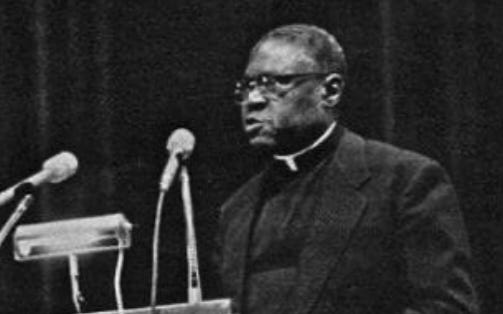
The National Baptist Convention USA, Inc., once represented a fortress of biblical orthodoxy. Leaders and distinguished members like L.K. Williams, the president who led the convention through an unprecedented era of church planting and the Great Depression; Adam Clayton Powell, Sr., an executive board member of the convention who built Abyssinian Baptist Church into a powerhouse of faith and created the model for other member churches to follow in social action using the bible as his guiding authority; Joseph H. Jackson, the former president who led the convention for nearly three decades with uncompromising theological conviction and strong biblical adherence; and E.V. Hill, one of the most distinguished executive board members whose evangelistic preaching combined prophetic fire with deep scriptural grounding—these men understood that the Black Church's prophetic witness depended on its theological foundation.
"Sanctify them through thy truth: thy word is truth" (John 17:17), Jesus prayed. These leaders believed sanctification—personal and social transformation—required submission to revealed truth, not the reverse.
But beginning in the late 1970s, something shifted. The same German higher criticism and liberal Protestant theology that had transformed white mainline denominations began infiltrating Black Baptist institutions, particularly in the Northeast. Seminary education increasingly emphasized social gospel frameworks that, while containing genuine insights about justice, often came packaged with skepticism toward biblical authority and a secular liberal agenda.
The transition was gradual, rarely announced. But over time, the pulpits that once thundered with "Thus saith the Lord" increasingly offered therapeutic advice and political commentary untethered from careful biblical exposition. The assumption that Scripture speaks with clarity and authority on all matters it addresses gave way to a more fluid hermeneutic, where cultural consensus could effectively override biblical teaching.
The Consequences of Theological Drift
This theological liberalization hasn't occurred in a vacuum—it has produced measurable consequences, two of which deserve particular attention. First, the rise of Black Religious Identity Cults, or BRIC movements. Today, most prominent of these are the Black Hebrew Israelites. Now, to be clear: these movements are theologically heretical, often trafficking in racism, antisemitism, and bizarre historical claims. They represent a departure from biblical orthodox Christianity, not its fulfillment.
But here's the uncomfortable truth: part of their appeal lies in their ostentatious display of biblical engagement. They memorize verses, argue from Scripture (however tortuously), and present themselves as taking the Bible seriously in a way many mainline Black churches no longer do. Young people who grew up in churches where the Bible was mentioned but not carefully taught, where social programs flourished but biblical literacy withered, find themselves attracted to any movement that appears to treat Scripture as authoritative—even a counterfeit one.
As Paul warned Timothy: "For the time will come when they will not endure sound doctrine; but after their own lusts shall they heap to themselves teachers, having itching ears" (2 Timothy 4:3). When churches abandon sound doctrine, people don't stop being religious—they find religion elsewhere, often in dangerous places.
Second, and perhaps more significant, is the quiet exodus of young, educated, upwardly mobile African-Americans from historically Black Baptist churches to non-denominational and predominantly white evangelical congregations. This migration rarely makes headlines, but speak with any multi-ethnic evangelical church in a major city, and you'll hear the same story: Black families, often in their twenties and thirties, seeking churches that prioritize clear biblical teaching and systematic theology.
They're not leaving because they reject the Black church or wish to escape racial identity. They're leaving because they're hungry for what many Black Baptist churches no longer consistently provide: careful exposition of Scripture, theological depth, and a vision of Christianity that transcends political allegiance or cultural accommodation.
They want what Ezra provided after the exile: leaders who "had prepared his heart to seek the law of the Lord, and to do it, and to teach in Israel statutes and judgments" (Ezra 7:10). They want churches that believe "faith cometh by hearing, and hearing by the word of God" (Romans 10:17)—and structure their ministry accordingly.
The Necessary Realignment
So we arrive at the present moment, and the question American Baptists—both Southern and historically Black congregations—must answer: Will they learn from the Anglican and Methodist experiences, or will they repeat them? The choice isn't between progress and reaction, or between liberalism and orthodoxy. It's between two competing authorities: Scripture as the norm, or contemporary culture as the lens through which Scripture must be filtered to remain relevant.
What's needed now is what the Anglicans and Methodists finally achieved: a clarifying realignment. Baptist identity, at its best, has always centered on biblical authority. And while every Baptist congregation that rejects this stance will or should not join such a movement, those that do hold to biblical orthodoxy need a institutional home where they can thrive without constant rearguard actions against theological drift.
For African-American Baptist churches particularly, this might mean forming new associations or conventions explicitly committed to the biblical authority their founders championed. It might mean younger pastors who've pursued theological education outside the liberalized system establishing networks of mutual accountability and support. It might mean difficult conversations about which institutions can be reformed and which must be replaced. It might mean for pastors to prayerfully consider church planting. It might mean for some preachers to intentionally pursue the revitalization of declining institutional Baptist churches.
The alternative is continued slow decline: orthodox congregations exhausted by denominational battles, young believers quietly departing for communities that teach Scripture seriously, and a once-mighty tradition becoming a historical footnote rather than a living force.
Drawing the Line
"Choose you this day whom ye will serve," Joshua commanded Israel (Joshua 24:15). The question wasn't whether service would occur—everyone serves something—but whom would be served.
American Baptists face a similar choice. They can continue the current arrangement, where incompatible theological visions coexist in uneasy tension, or they can acknowledge what global Christianity has already demonstrated: institutions cannot simultaneously embrace biblical authority and subordinate it to cultural accommodation.
This isn't about creating perfect churches—those don't exist. It's about establishing institutional structures aligned with Baptist convictions about Scripture's role. It's about ensuring that future generations inherit churches where "All scripture is given by inspiration of God" isn't just a creedal statement but a functional reality shaping teaching, practice, and mission.
The Anglicans and Methodists waited decades before realigning, hoping for solutions that never materialized. Baptists can choose differently. They can acknowledge the theological zoo in the room, draw the necessary lines, and begin the hard work of realignment around shared commitment to biblical authority.
Because ultimately, the question isn't whether realignment will happen. History suggests it's inevitable. The question is whether it will happen soon enough to preserve the theological heritage that makes Baptist identity meaningful—or whether another generation will drift away first, seeking elsewhere what their tradition once provided: churches where God's Word still has the final say.
W.B. Yeats, The Collected Poems of W.B. Yeats. (1989)


👏🏽👏🏽👏🏽